
Table of Contents
- Why Commercial Electrical Infrastructure Upgrades Matter
- BS 7671 Electrical Compliance for Commercial Upgrades
- Electrical Load Capacity Assessment: Planning Your Upgrade
- Smart Building Technology Integration During Upgrades
- Key Benefits of Modern Commercial Electrical Infrastructure
- Common Challenges and How to Solve Them
- Planning Your Commercial Electrical Infrastructure Upgrade
- Frequently Asked Questions
Last Updated: 21 September 2026
Why Commercial Electrical Infrastructure Upgrades Matter
Modern commercial buildings face mounting pressure to deliver efficiency, security, and operational reliability. An ageing electrical system creates bottlenecks: insufficient power distribution, unreliable circuits, and incompatibility with contemporary technologies. Commercial electrical infrastructure upgrades address these constraints directly, enabling businesses to support advanced systems whilst reducing energy waste and downtime.
The stakes are high. A single electrical failure can halt operations across an entire floor or facility. Beyond immediate disruption, outdated infrastructure creates hidden costs: higher energy bills, increased maintenance calls, safety risks, and the inability to integrate emerging technologies like smart building systems or advanced security networks.
At AME Electrical, we work with commercial property managers, hospitality operators, and developers who recognise that upgrading electrical infrastructure isn’t optional, it’s foundational. The right upgrade strategy transforms how a building operates, how much it costs to run, and what technologies it can support going forward.
This guide walks you through the process of planning and executing commercial electrical infrastructure upgrades, from compliance considerations to smart building integration and the tangible benefits modern systems deliver.
BS 7671 Electrical Compliance for Commercial Upgrades
BS 7671 is the standard that governs electrical safety in commercial buildings across the UK. This standard, formally known as the Requirements for Electrical Installations, sets mandatory safety requirements for design, installation, inspection, and maintenance. Compliance isn’t negotiable, it’s a legal requirement and a fundamental safeguard for occupants and assets.
When planning commercial electrical infrastructure upgrades, BS 7671 compliance shapes every decision. The standard mandates specific circuit protection methods, earthing systems, cable sizing, and testing protocols. Many older installations fall short of current BS 7671 requirements, which is precisely why upgrades often become necessary.
A qualified electrician conducting a commercial electrical infrastructure upgrade will perform a detailed risk assessment against current BS 7671 standards. This assessment identifies gaps: circuits that lack proper protection, earthing systems that don’t meet current tolerances, cable routes that create fire hazards, or distribution boards that can’t safely handle modern electrical loads.
BS 7671 updates occur periodically as safety knowledge evolves. Before starting any commercial electrical infrastructure upgrade, confirm which edition applies to your facility and whether your current installation meets those requirements.
The compliance process involves more than simply installing new equipment. It requires inspection and testing at multiple stages: initial verification when circuits are first installed, periodic testing during the upgrade process, and final certification before the system is energised. This staged approach ensures that every component meets standard and that the system functions safely under real operational conditions.
Electrical Load Capacity Assessment: Planning Your Upgrade
Electrical load capacity assessment determines how much power your building can safely distribute and identifies where current systems fall short. This assessment is the foundation of any effective commercial electrical infrastructure upgrade strategy.
A thorough load assessment begins with documenting current consumption: what equipment is running, how often, and for how long. Then it projects future demand: new technologies you plan to install, anticipated growth, and seasonal variations. The electrician compares actual and projected demand against the capacity of your current distribution boards, cables, and supply connections.
Many commercial buildings discover during assessment that their electrical infrastructure is already operating near maximum capacity. Adding new systems, smart lighting, climate control, security networks, or additional workstations, would overload circuits and create safety risks. This finding often triggers the decision to upgrade.
The assessment also identifies which circuits are underutilised and which are stressed. A modern commercial electrical infrastructure upgrade redistributes load across circuits more efficiently, often installing additional circuits to separate high-demand equipment from general-purpose outlets. This approach improves reliability and makes future expansion safer.
Load capacity assessment isn’t a one-time exercise. As your business grows or technology needs change, periodic reassessment ensures your electrical infrastructure can support new demands without overloading existing circuits.
Smart Building Technology Integration During Upgrades
Smart building technology integration during upgrades allows you to embed automation, monitoring, and control systems directly into your electrical infrastructure. Rather than retrofitting automation onto an ageing system, integrating it during an upgrade creates a cohesive, reliable foundation.
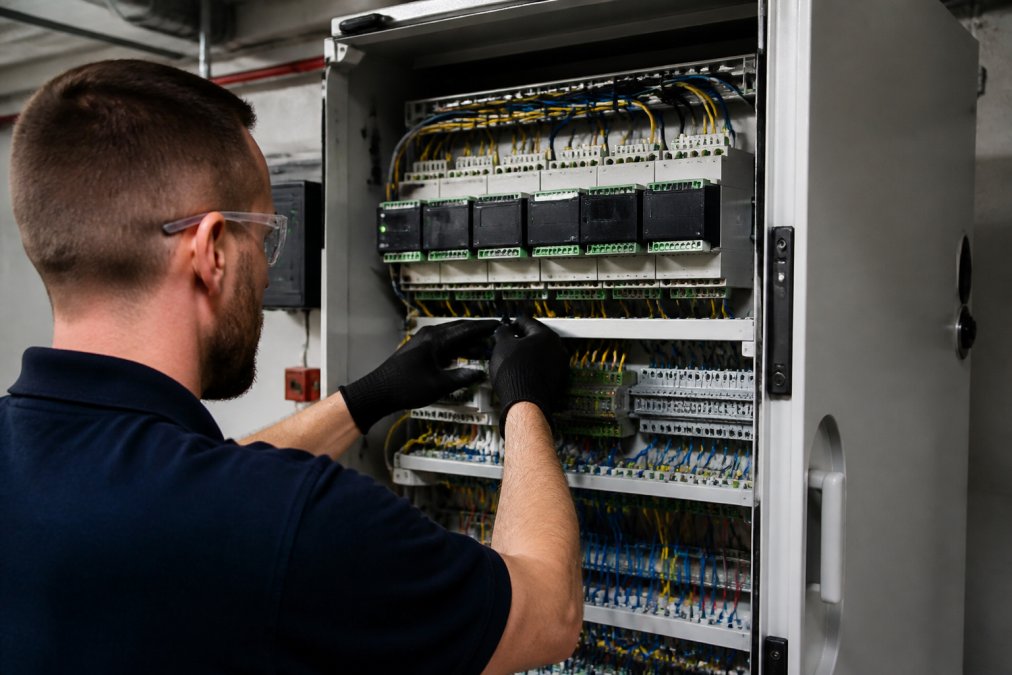
Smart building systems manage lighting, climate, security, and energy consumption through centralised control. KNX systems, for example, allow individual devices to communicate over a shared protocol, enabling sophisticated automation without requiring separate wiring for each function. During an upgrade, electricians can install the control infrastructure, conduits, cabling, and distribution points, that smart systems require.
Integration during upgrade offers several advantages. First, the electrical infrastructure is designed to support smart devices from the outset, rather than being retrofitted later. Second, you avoid the disruption of retrofitting automation into an operational building. Third, you have the opportunity to plan the system holistically: deciding which areas need automation, what level of control is required, and how systems will communicate.
Many hospitality operators and commercial property managers have found that integrating smart systems during an electrical infrastructure upgrade delivers measurable benefits. Automated lighting reduces energy consumption. Climate control systems respond to occupancy and time of day. Security systems integrate with access control and alarm networks. The result is a building that operates more efficiently and provides better occupant experience.
Key Benefits of Modern Commercial Electrical Infrastructure
Modern commercial electrical infrastructure delivers four primary benefits: safety, efficiency, flexibility, and reliability.
Safety improvements are immediate. Updated systems meet current BS 7671 standards, incorporate modern circuit protection, and eliminate hazards created by ageing installations. Proper earthing and bonding systems protect occupants and equipment from electrical faults.
Energy efficiency reduces operational costs. Modern distribution systems, efficient transformers, and smart monitoring allow you to identify and reduce waste. Upgraded electrical infrastructure can significantly reduce energy consumption compared to ageing systems, simply through improved efficiency and the ability to monitor consumption in detail.
Flexibility enables future growth. Modern commercial electrical infrastructure supports new technologies, additional circuits, and expanded capacity without the need for complete replacement. When your business adds new equipment or expands operations, your electrical system can accommodate these changes without major disruption.
Reliability translates to reduced downtime.
Commercial property managers overseeing multiple buildings, hospitality operators needing reliable infrastructure to support guest services, and businesses planning significant technology investments.
Common Challenges and How to Solve Them
Challenge: Operational Disruption
Upgrading electrical infrastructure whilst maintaining business operations is complex. Partial shutdowns may be necessary for circuit work, and poor planning can extend downtime unnecessarily.
Planning Your Commercial Electrical Infrastructure Upgrade
Step 1: Assessment and Documentation
Engage a qualified electrician to assess your current system against BS 7671 standards and your operational needs. Document existing infrastructure, identify deficiencies, and establish compliance gaps. This assessment forms the foundation of all subsequent decisions.
| Phase | Key Activities | Duration | Outcome |
|---|---|---|---|
| Assessment | System evaluation, compliance audit, needs analysis | 1-2 weeks | Detailed report and upgrade plan |
| Design | Circuit layout, technology selection, detailed drawings | 2-3 weeks | Approved design and specifications |
| Installation | Circuit installation, testing, integration | Varies by scope | Fully operational upgraded system |
| Certification | Final testing, compliance verification, documentation | 1 week | BS 7671 certification and handover |
Frequently Asked Questions
What are the signs that a commercial building needs an electrical infrastructure upgrade?
Common indicators include frequent circuit breaker trips, flickering lights, outdated wiring that cannot support modern equipment, insufficient socket outlets, and systems that no longer meet current safety standards. If your building is over 20 years old or you’re experiencing power capacity issues when adding new technology, an assessment is advisable. Professional inspection will identify whether your current infrastructure can support your operational needs.
How does BS 7671 electrical compliance affect commercial electrical infrastructure upgrades?
BS 7671 sets the standard for electrical safety in commercial buildings. Any upgrade must comply with current regulations, including earthing, overcurrent protection, and residual current device (RCD) installation. Non-compliance creates safety risks and liability issues. Professional installers ensure all work meets these standards, protecting both your building and occupants while avoiding enforcement action from local authorities.
What is an electrical load capacity assessment and why do I need one?
An electrical load capacity assessment calculates how much electrical demand your building can safely support. It examines current circuits, connected equipment, and future requirements to determine if upgrades are necessary. This assessment prevents overloading your system, reduces fire risk, and ensures you have adequate capacity for new technologies like smart building systems, climate control, and security infrastructure without costly future modifications.
Can smart building technology integration work with my existing electrical system?
Modern smart building technology can often integrate with existing systems, but compatibility depends on your current infrastructure’s age and condition. Newer systems may require additional wiring, control panels, or network infrastructure. A professional assessment will identify what can be adapted and what requires upgrading. Many commercial properties benefit from a phased approach, integrating smart controls gradually whilst upgrading underlying electrical infrastructure.
How long does a commercial electrical infrastructure upgrade typically take?
Timeline varies significantly based on building size, upgrade scope, and system complexity. Small upgrades may take weeks, whilst comprehensive infrastructure overhauls can span several months. Planning, design, compliance approvals, and material procurement add time before installation begins. Minimising business disruption often requires phased work or off-hours scheduling, which may extend the overall timeline but reduces operational impact.
What happens after my commercial electrical infrastructure upgrade is complete?
Professional installation includes comprehensive testing and certification to confirm compliance and safety. Ongoing support ensures systems operate optimally, with regular maintenance checks, firmware updates for smart systems, and rapid response if issues arise. Reliable support prevents the costly situation where systems fail after installation. Verify that your installer provides documented warranty coverage and accessible ongoing support before committing to the upgrade.
How does upgrading electrical infrastructure improve energy efficiency?
Modern electrical systems reduce wasted energy through improved distribution, better insulation, and efficient components. Smart building technology integration allows precise control of lighting, heating, and cooling based on actual occupancy and requirements, eliminating unnecessary consumption. LED lighting, variable frequency drives, and automated systems can reduce energy demand significantly. These improvements lower operating costs whilst reducing environmental impact and supporting sustainability goals.