
Table of Contents
- Why Hire a Professional KNX Installer Instead of a Standard Electrician
- KNX Certification Requirements to Check Before You Hire
- What the KNX System Commissioning Process Actually Involves
- Smart Home Automation Costs: What Drives the Price
- Questions to Ask Before You Hire a Professional KNX Installer
- Integrating Existing Smart Devices With a New KNX System
- Conclusion
- Frequently Asked Questions
Last Updated: September 10, 2026
Why Hire a Professional KNX Installer Instead of a Standard Electrician
To hire a professional KNX installer in Ireland, homeowners and businesses need a specialist, not a general electrician. KNX is a decentralised building automation standard, and commissioning it properly requires certified training that sits well outside standard electrical qualifications (knx.org).
The difference shows up in the details. A standard electrician can wire a circuit safely. A KNX partner can program a bus topology, set group addresses, and make your lighting, heating, blinds, and security behave as one coordinated system rather than a collection of switches.
At AME Electrical, we see this distinction play out constantly on renovation and new-build projects. Homeowners who start with a general electrician often end up paying twice: once for the initial wiring, then again for a specialist to make the automation actually function.
There’s a second reason the choice matters. KNX systems are designed to be maintained and expanded over decades. Poor commissioning locks you into a fragile setup that’s expensive to fix later. Good commissioning gives you a system you can build on.
KNX Association official standard documentation
The most common and costly mistake is treating KNX as “just smart switches.” If the installer doesn’t understand bus topology and group addressing, your system may work on day one and become unmanageable within a year.
KNX Certification Requirements to Check Before You Hire
The certification requirement is simple to verify: your installer should be a certified KNX Partner, listed on the official KNX Association database (knx.org). This confirms they’ve completed accredited training and passed the required assessment.
When you hire a professional KNX installer in Ireland, ask for their partner status directly. It’s a public record, so there’s no reason for hesitation on either side.
| What to Check | Why It Matters | How to Verify |
|---|---|---|
| KNX Partner certification | Confirms accredited training | KNX Association database |
| ETS software proficiency | Required for commissioning | Ask for project examples |
| Relevant insurance | Protects you on site | Request certificate |
| Ongoing support offered | Avoids orphaned systems | Ask contractually |
Certification isn’t the whole picture, though. A certified installer with no residential experience may still struggle with the nuances of a luxury home or boutique hotel. Look for a track record that matches your project type.
What the KNX System Commissioning Process Actually Involves
KNX system commissioning is the structured process of configuring, programming, and testing every device on the bus so the building behaves as a single, coordinated system. It’s the stage where a wired installation becomes a working smart building.
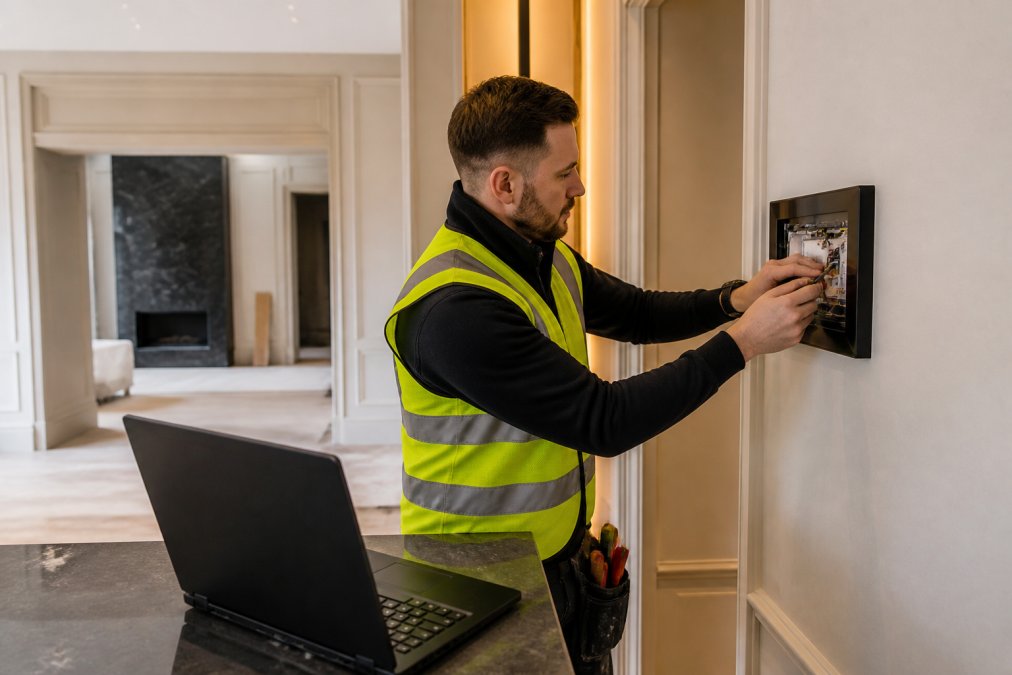
The process typically moves through several stages:
- Physical verification of wiring and device addressing
- Loading the project into ETS engineering software
- Assigning group addresses and building logical links
- Testing each function individually, then in combination
- Handover with documentation and user training
What most guides miss is how much of the value sits in the testing phase. A system can appear to work while hiding conflicts that only surface under real use. Thorough commissioning catches those before you move in.
Smart Home Automation Costs: What Drives the Price
Smart home automation costs depend on scope, device count, and the complexity of integration. There’s no meaningful single figure, because a two-room lighting upgrade and a fully integrated commercial property are entirely different projects.
Pricing typically reflects:
- Number of circuits, devices, and control points
- Whether wiring is new-build or retrofit
- Integration with existing systems and third-party devices
- Commissioning time and project complexity
- Ongoing support arrangements
For a current quote tailored to your property, AME Electrical can assess your plans directly. We’d rather give you an accurate figure than a headline number that changes once we see the site.
Ask for a breakdown that separates hardware, labour, and commissioning. Commissioning is often the largest and least understood line, and it’s where cheap quotes quietly cut corners.
Questions to Ask Before You Hire a Professional KNX Installer
Before hiring a professional KNX installer, Irish homeowners should ask about certification, commissioning scope, and post-installation support. These three areas separate a lasting system from an expensive one.
Use this checklist:
- Are you a certified KNX Partner, and can I see your listing?
- Who handles commissioning, and is it included in the quote?
- What documentation and training do I receive at handover?
- What ongoing support do you provide after installation?
- Can you integrate the smart devices I already own?
That last point matters more than most people expect. Plenty of homeowners already have Philips Hue, basic automation, or older systems they don’t want to scrap. A capable installer will tell you honestly what can be integrated and what genuinely needs replacing.
The single most important question is about post-installation support. A KNX system is a long-term investment, and the provider relationship matters as much as the installation itself.
Integrating Existing Smart Devices With a New KNX System
Existing smart devices can often be integrated with a new KNX system, though the extent depends on the protocols involved. KNX is an open standard, which is precisely why it plays well with others when configured correctly.
Devices using common standards can frequently be brought into the same control environment. Proprietary or cloud-only devices are more difficult, and some may need replacing.
This is where a specialist earns their fee. The integration work is rarely about the hardware, it’s about the logic that makes disparate systems respond as one. Get it right and the homeowner never notices the seams.
Conclusion
The challenge with KNX is that a poor installation can look fine on the surface while quietly failing underneath. Choosing a certified specialist is what protects your investment over the years that follow.
AME Electrical provides certified KNX and Nice installation, comprehensive service from consultation and design through to installation and support, and a personal, relationship-driven approach for residential and commercial clients. We work with homeowners, developers, and hospitality businesses who want systems that stay reliable.
Get a quote from AME Electrical and build a smart environment that’s genuinely future-ready.
Frequently Asked Questions
What qualifications should a professional KNX installer have?
A qualified KNX installer should hold a current KNX Partner certification, which requires completing an accredited training course and passing an exam. They should also have relevant electrical qualifications and demonstrable experience with the specific systems used in your project, such as lighting, HVAC or access control. Ask to see certification evidence and examples of completed installations before you hire a professional KNX installer.
How do I verify if a KNX installer is certified?
Ask the installer for their KNX Partner number and check it against the official KNX Association directory. Certification is tied to a specific individual, not just a company, so confirm who will actually be on site. A certified partner can show proof of training and will be able to explain the commissioning process in detail. If an installer cannot provide this, treat it as a warning sign.
How much does professional KNX installation cost?
Smart home automation costs vary widely depending on property size, the number of circuits and devices, and whether the project is a new build or a retrofit. Pricing depends on quantity, dates and delivery, so the only reliable figure comes from a site-specific quote. Request a detailed breakdown that separates hardware, labour and commissioning rather than accepting a single lump sum.
What is the difference between a standard electrician and a KNX integrator?
A standard electrician wires circuits to current regulations. A KNX integrator also designs the bus topology, configures devices using ETS software, and commissions the system so lighting, heating, blinds and security work together. The commissioning stage is where most of the value sits, and it requires training a general electrician will not have. This is why hiring a certified KNX partner matters for complex projects.
Can you integrate existing smart devices like Philips Hue into a KNX system?
In most cases, yes. KNX gateways exist for many third-party ecosystems, so existing devices can often be brought under a single control interface rather than replaced. The feasibility depends on the specific brands and protocols already in place. A certified integrator will survey what you have and confirm which elements can be retained before recommending any changes.
What happens after KNX installation if something goes wrong?
Ongoing support should be agreed before work starts. Ask what warranty covers the installation, how quickly faults are responded to, and whether remote diagnostics are included. A reputable integrator will also hand over documentation, including the ETS project file, so another qualified partner can service the system if needed. Confirm these terms in writing rather than relying on verbal assurances.