
Table of Contents
- What Makes an Integrated Alarm System Ideal for Luxury Homes
- Comparison Table: Top Integrated Alarm Systems for Luxury Properties
- Smart Home Security System Integration: Core Features to Expect
- Alarm Systems with CCTV Integration for Complete Coverage
- Home Security Automation Without Cloud: Local Control Options
- Wired vs Wireless Home Alarm Systems for Luxury Properties
- How to Choose the Right Integrated Alarm System for Your Home
- Frequently Asked Questions
Last Updated: October 14, 2026
What Makes an Integrated Alarm System Ideal for Luxury Homes
When considering the 5 best integrated alarm systems for luxury homes, you’ll find they go far beyond motion sensors and door locks. It’s a unified security architecture that connects surveillance, access control, lighting, climate, and emergency response into one seamless interface, all controlled from a single app or panel.
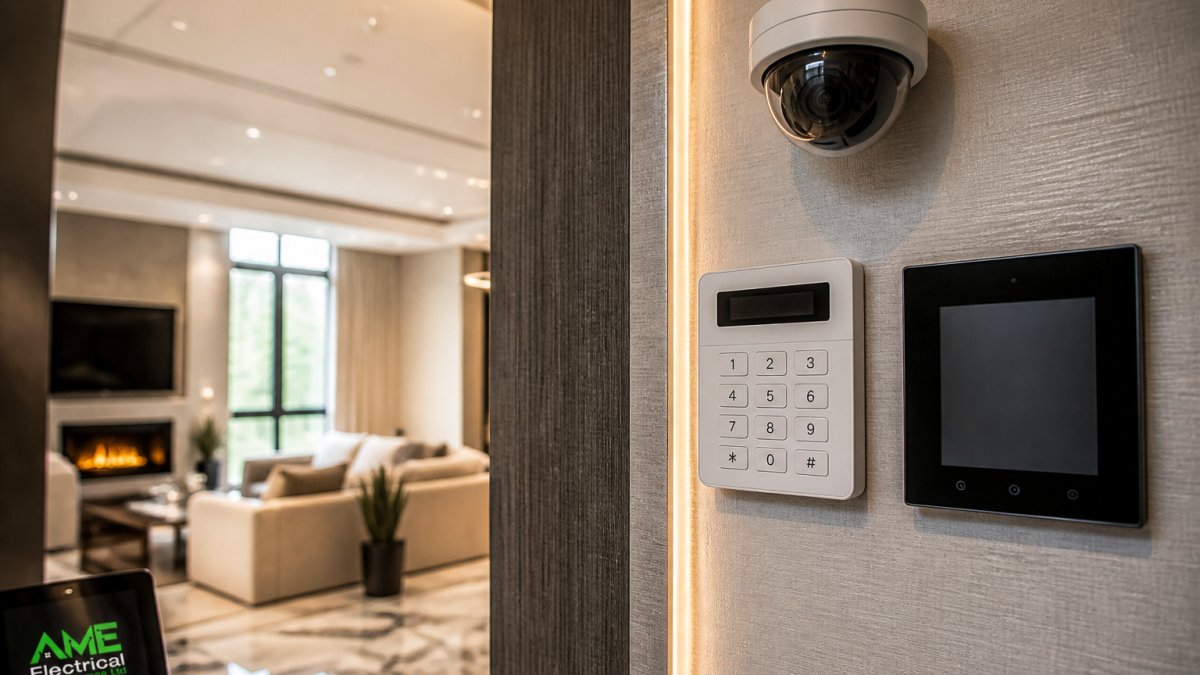
The real difference isn’t just convenience. When your security, lighting, and access systems speak the same language, they amplify each other. A perimeter breach can trigger floodlights and lock interior doors simultaneously. Motion detection can differentiate between a resident moving through a hallway and an intruder in a restricted area. Luxury properties demand this level of sophistication, not because it’s trendy, but because the stakes are higher.
What separates a truly integrated system from a collection of smart devices is architecture. Most off-the-shelf solutions bolt together incompatible platforms. A proper integrated alarm system uses a single protocol, typically KNX or a proprietary standard, so every component responds instantly to every other component. Latency matters when security is involved. A one-second delay between perimeter detection and door lock engagement is a vulnerability.
Luxury homes also face unique challenges that standard systems ignore. High ceilings and complex layouts defeat generic motion sensors. Multiple entry points and guest access patterns require granular permission controls. Large grounds need distributed CCTV coverage without Wi-Fi dead zones. These aren’t problems a consumer-grade alarm system was designed to solve.
Comparison Table: Top Integrated Alarm Systems for Luxury Properties
| System | Best For | Key Strength | Installation |
|---|---|---|---|
| AME Electrical | Comprehensive luxury integration | Certified KNX expertise, bespoke design | Professional, customised |
| Vivint | Smart-home-first security | Integrated automation ecosystem | Professional installation |
| ADT | Professional monitoring priority | Established monitoring infrastructure | Professional installation |
| SimpliSafe | DIY flexibility with monitoring | Self-monitoring or professional options | DIY or professional |
| Abode | Smart-home compatibility focus | Third-party device integration | DIY or professional |
Smart Home Security System Integration: Core Features to Expect
A smart home security system integration means your alarm doesn’t exist in isolation, it communicates with every other system in your home. When a window sensor triggers, the system can simultaneously alert you, activate specific lights to deter intruders, unlock a safe room, and notify your monitoring centre. This coordinated response is what separates luxury integration from basic security.
The core features you should expect include real-time alerts across all devices, centralised control from a single interface, and automation rules that respond to multiple conditions. For example: “If perimeter breach is detected AND it’s after midnight AND no resident is home, lock all interior doors, activate all exterior lighting, and send emergency alert.” That’s integration. A system that only alerts you to the breach and makes you manually lock doors is not.
CCTV integration matters enormously. Luxury homes often have multiple cameras covering different zones, front entrance, rear gardens, interior corridors, pool areas. A fragmented system means reviewing footage across five separate apps. An integrated system streams all cameras to one dashboard, with motion detection that can trigger recording on specific zones based on which alarm sensors were triggered.
Access control integration is equally critical. A proper system knows the difference between your housekeeper arriving at 9 AM on Tuesday and an unknown person at 2 AM. It can grant temporary access codes for contractors, revoke them automatically after the job ends, and log every entry with timestamp and identity. This granularity is essential in luxury properties where multiple people need access at different times.
Alarm Systems with CCTV Integration for Complete Coverage
CCTV integration transforms your alarm system from reactive to preventative. When a sensor detects motion, the system can automatically record footage from relevant cameras, timestamp it, and file it with the alert. When you review the incident, you see exactly what happened, not just a timestamp.
The technical requirement here is synchronisation. Your CCTV system and alarm system must share the same network architecture and time reference. A one-second clock drift between devices creates gaps in coverage and makes incident reconstruction unreliable. Professional installations use network time protocol (NTP) to keep all devices synchronised to within milliseconds.
Resolution and coverage matter more in luxury properties. A single 2MP camera covering a 50-metre driveway creates blind spots. Proper integration uses multiple cameras, wide-angle for perimeter overview, telephoto for entry points, infrared for night coverage, all feeding into one system that knows which camera to prioritise based on which alarm sensor triggered.
Storage integration is often overlooked. Luxury homes generate enormous amounts of video footage. Local storage on the recorder fills up quickly. Cloud backup is convenient but creates privacy and latency concerns. The best integrated systems offer hybrid storage: continuous local recording for quick access, with selective cloud backup for critical events. The system itself decides what matters based on alarm triggers.
Home Security Automation Without Cloud: Local Control Options
Many homeowners worry about cloud dependency. If your internet drops, does your security system fail? The answer depends on your architecture. A true local control system keeps all decision-making on-site. Your alarm panel, CCTV recorder, and access control server run independently. If your internet connection fails, your security doesn’t.
Local control requires proper infrastructure. The system needs a dedicated server or controller on-site, hardwired power supply with battery backup, and local network connectivity between all devices. This is more complex than cloud-dependent systems, which is why it’s typically found only in luxury and commercial installations.
The advantage is decisive: no latency, no privacy concerns, no dependency on a third-party data centre. Your alarm triggers instantly. Your CCTV records locally. Your access logs are stored on your own hardware. You’re not sending video streams or access data to an external server.
The trade-off is maintenance. A local system requires someone to manage the hardware, apply updates, and handle backups. Cloud systems push this responsibility to the provider. For luxury homes where security is non-negotiable, most clients accept this trade-off. For properties where convenience outweighs control, cloud integration may be preferable.
Professional installers manage this complexity. We design systems that operate independently of cloud services, with optional cloud backup for redundancy. Your security never depends on internet availability.
Wired vs Wireless Home Alarm Systems for Luxury Properties
The wired vs wireless debate is simpler than it appears when you’re installing luxury systems. Wireless offers convenience and flexibility. Wired offers reliability and speed.
Wireless systems use radio frequencies to communicate between sensors, cameras, and the main panel. No cables means easier installation, especially in period properties where running conduit would damage original features. Wireless devices are battery-powered, so they function during power outages (until batteries drain). They’re also easier to expand, add a new sensor without rewiring.
The limitations matter in luxury properties. Radio frequency signals can be jammed or blocked by metal structures, thick walls, or interference from other devices. Battery-powered sensors require regular maintenance. Wireless networks introduce latency, typically 100-500 milliseconds between sensor trigger and response. For security, that’s significant.
Wired systems use physical cables to connect every device directly to the main panel. Signals travel at the speed of electricity: essentially instantaneous. Wired devices draw power from the main system, so they never fail due to dead batteries. Wired networks are immune to radio interference.
The disadvantage is installation. Running cables through existing walls requires either surface-mounted conduit (visually intrusive) or wall chasing (destructive, requires decoration afterwards). In new builds, wired installation is straightforward. In renovations, it’s more complex.
The best luxury installations use hybrid approaches. Perimeter security, doors, windows, CCTV, runs wired for reliability. Interior sensors and guest-area access points run wireless for flexibility. This combines the speed and reliability of wired systems with the convenience of wireless where it matters less.
How to Choose the Right Integrated Alarm System for Your Home
Start by defining your actual security priorities. Are you protecting against burglary, unauthorised access, environmental hazards, or all three? A luxury home in a low-crime area has different needs than a high-profile property in a city centre.
Next, assess your existing infrastructure. Do you have structured cabling throughout the property? Is your Wi-Fi reliable? Do you have existing smart-home systems that need integration? Retrofitting into an older property is more complex than installing in a new build. Be realistic about what’s feasible without major renovation.
Consider your tolerance for cloud dependency and ongoing support. A system that requires cloud connectivity is simpler to install but creates long-term dependency. A local system requires professional installation and maintenance but gives you complete control. Neither is inherently better, it depends on your priorities.
Evaluate the installer’s expertise, not just the equipment brand. A luxury system is only as good as its installation and configuration. An installer who understands your property’s specific challenges, listed building restrictions, period features, complex layouts, will design a better system than someone following a generic template.
Finally, plan for growth. Your security needs will evolve. Your system should accommodate expansion without requiring a complete redesign. A properly architected system uses standardised protocols that allow future additions without compatibility issues.
At AME Electrical, we begin every project with a detailed consultation. We assess your property, understand your security concerns, evaluate your existing infrastructure, and design a system that fits your specific needs.
Choosing among the 5 best integrated alarm systems for luxury homes requires balancing security effectiveness, convenience, and long-term reliability. For luxury homes, this means moving beyond consumer-grade systems toward professionally designed, customised solutions.
Frequently Asked Questions
What is an integrated alarm system and how does it differ from a standard security system?
An integrated alarm system combines security monitoring with smart home controls, allowing your alarm, lighting, heating, and access systems to work together through a single interface. Unlike standard systems that operate independently, integrated alarm systems for luxury homes enable coordinated responses, for example, lights can activate automatically when motion is detected, or the heating system can adjust when the alarm is armed. This seamless coordination enhances both security and convenience whilst reducing the need to manage multiple separate systems.
Can I integrate my existing smart home devices with a professional alarm system?
Integration depends on the specific devices and alarm system you have. Many modern systems support popular brands and protocols, but compatibility varies. Some systems work with proprietary ecosystems, whilst others use open standards like KNX that allow broader compatibility. Before committing to an upgrade, a professional installer can assess your existing equipment, whether Philips Hue lighting, basic automation, or other brands, and advise whether they can be incorporated into a unified system or whether selective upgrades would be necessary. Professional consultation ensures you understand what can be retained and what may need replacement.
What happens to an integrated alarm system if the internet goes down?
Systems designed for home security automation without cloud dependency maintain full functionality during internet outages because they rely on local processing rather than remote servers. Wired systems with local control panels continue to operate normally. Wireless systems may lose remote access via smartphone apps but retain on-site operation. Systems that depend heavily on cloud services may lose some features, though core alarm and sensor functions typically remain active. When selecting a system, clarify whether critical functions operate locally, which is especially important for luxury homes where reliability is a priority.
Are wired alarm systems more reliable than wireless ones for a luxury home?
Wired systems offer consistent power and signal reliability because they don’t depend on battery life or wireless signal strength, making them exceptionally reliable for luxury properties where downtime is unacceptable. Wireless systems offer flexibility and easier installation, particularly in listed buildings or homes where running cables is impractical, but they require battery maintenance and can be affected by signal interference. For luxury homes, many installers recommend a hybrid approach: wired backbone systems for critical sensors and access points, combined with wireless devices for flexibility in areas where wiring isn’t feasible. Your specific home layout and priorities should guide this choice.
What ongoing support should I expect after an integrated alarm system is installed?
Professional installers should provide system commissioning, user training, and documented setup details upon completion. Ongoing support typically includes technical assistance, system updates, sensor battery replacement, and annual servicing to ensure optimal performance. Some providers offer 24/7 monitoring and emergency response, whilst others focus on technical support only. Before installation, confirm what’s included: response times for faults, availability of spare parts, training for new household members, and whether support extends beyond the first year. Reliable ongoing support is essential because integrated systems require coordination across multiple components, and early intervention prevents small issues from becoming costly problems.