
Table of Contents
- Why Heating Automation Matters in Large Properties
- Understanding Multi-Zone Heating Control
- Selecting Smart Thermostats for Multiple Rooms
- Setting Up Room-by-Room Heating Schedules
- Integrating Heating Automation with Home Assistant
- Assessing Your Current System Before Automation
- Ensuring Long-Term Reliability and Support
- Conclusion
- Frequently Asked Questions
Last Updated: 15 October 2026
Why Heating Automation Matters in Large Properties
Large homes present a unique challenge: maintaining comfort across multiple rooms without wasting energy on spaces nobody’s using. Traditional heating systems treat your entire property as one zone, pushing heat everywhere equally. The result? Overheated bedrooms at night, cold kitchens in the morning, and energy bills that don’t reflect how you actually live.
How to automate heating in large homes changes this completely. Instead of one thermostat controlling everything, you divide your property into separate zones. Each zone heats independently based on occupancy, time of day, and your preferences. A guest bedroom stays cool when empty. Your lounge warms up an hour before you arrive home. Hallways maintain minimal heat overnight.
This approach saves money and improves comfort simultaneously. You’re not paying to heat rooms that don’t need it. At the same time, the rooms you occupy reach your preferred temperature automatically.
The complexity lies in choosing the right system and integrating it with your existing infrastructure. That’s where professional guidance matters. We at AME Electrical have helped numerous property owners implement heating automation that actually works, systems that don’t fail after two years or require constant manual adjustment.
Understanding Multi-Zone Heating Control
Multi-zone heating divides your property into separate areas, each with its own temperature control. Instead of one thermostat managing the entire house, you install multiple thermostats or zone valves that operate independently.
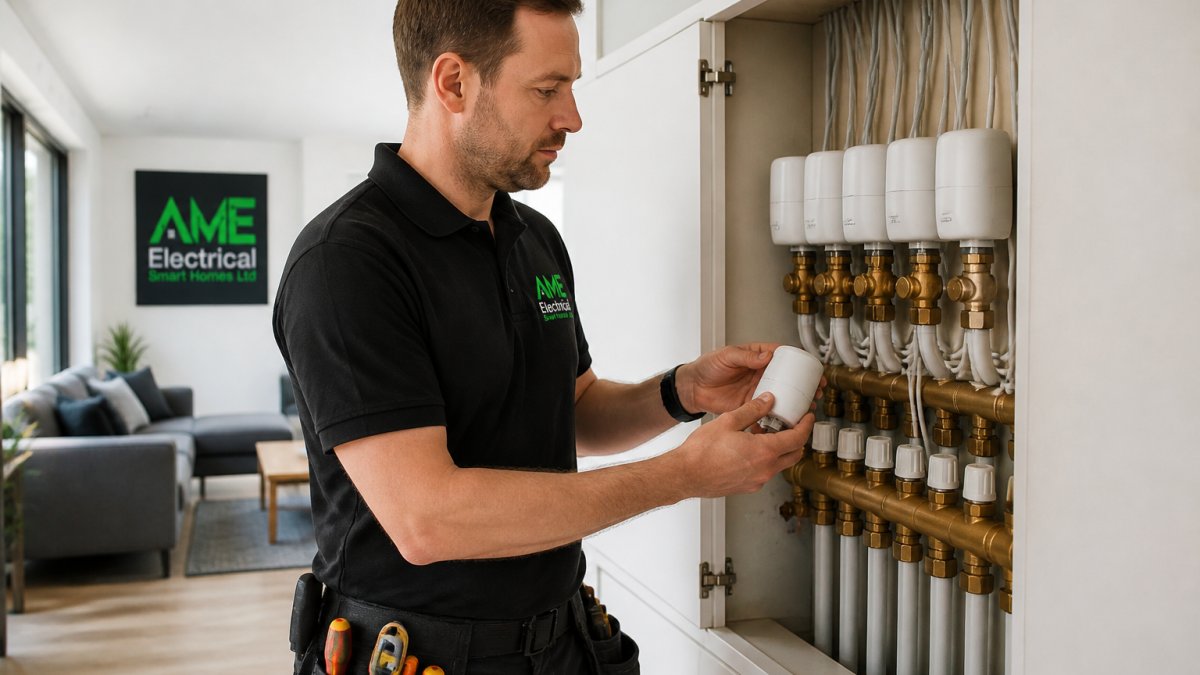
Here’s how it works in practice:
- Zone valves sit inside your heating pipes and open or close to direct hot water to specific radiators
- Smart thermostats in each zone measure temperature and signal the system when heating is needed
- A central controller coordinates all zones, ensuring they work together rather than fighting each other
- Motorised actuators on individual radiators can shut off heat to unused rooms without affecting others
The key advantage is precision. You’re not overheating your entire home to reach a comfortable temperature in one room. Each zone responds to its own demand.
For large homes, this matters enormously. A property with four bedrooms, a lounge, dining room, kitchen, and hallways might have three or four distinct zones. The upstairs bedrooms form one zone. The ground floor living spaces form another. The kitchen, which generates its own heat, might operate separately. Hallways and transitional spaces often need minimal heating.
This structure prevents the common problem where heating one area forces uncomfortable temperatures elsewhere. Your guests’ bedroom doesn’t have to stay warm all day simply because your lounge is occupied.
Selecting Smart Thermostats for Multiple Rooms
Not all smart thermostats work well in multi-zone setups. Some are designed for single-zone properties and struggle when managing multiple independent areas.
The best options for smart thermostats for multiple rooms share specific characteristics:
- Wireless connectivity that doesn’t rely on a single hub (reduces single points of failure)
- Local control capability so the system works even if your internet drops
- Integration with standard heating systems rather than proprietary boilers
- Scheduling flexibility that lets you set different times for different zones
- Manual override so occupants can adjust temperature without an app
- Clear display showing current temperature and set point without confusion
Look for thermostats that communicate via open standards like Zigbee or Z-Wave. These allow you to mix and match devices from different manufacturers without vendor lock-in. Proprietary systems often create problems down the line when the manufacturer discontinues support or you need to replace a failed unit.
For large homes, wireless thermostats avoid the cost and disruption of running new cables through walls. They mount easily on existing radiators or walls in each zone. Battery life matters, choose models that run for 2-3 years on standard batteries rather than those requiring annual replacement.
Consider whether you want a central touchscreen hub or smartphone control. Many people assume they want app control, then rarely use it. A physical interface in a central location often works better for households where multiple people adjust temperature.
Setting Up Room-by-Room Heating Schedules
Once your zones are physically separated, scheduling brings the real efficiency gains. Room-by-room heating schedules let you align heat delivery with actual occupancy patterns.
Start by mapping your household’s typical day:
- Bedrooms: minimal heat overnight, ramp up 30 minutes before waking
- Bathrooms: brief heat bursts in morning and evening
- Lounge: full heat during evening hours when occupied
- Kitchen: often needs less heat due to cooking and appliance warmth
- Hallways: low background heat to prevent condensation
Most smart thermostats let you set different schedules for weekdays and weekends. This matters because your Saturday routine likely differs from your weekday pattern. The system can learn these patterns if you use it consistently, adjusting automatically without manual input.
Avoid overly complicated schedules. Five or six temperature changes per day per zone is the practical limit. More frequent changes create instability and waste energy as the system constantly adjusts. Aim for gradual temperature shifts rather than dramatic swings.
Temperature setback, lowering heat when zones are unoccupied, delivers the biggest savings. Dropping temperature by just 2°C in an unused zone for eight hours daily cuts heating energy for that space by roughly 15%. Over a large property with multiple zones, this compounds significantly.
Test your schedule for two weeks before considering it final. Real-world patterns often surprise you. That guest room might need more heat than expected. The kitchen might stay warmer than anticipated. Adjust based on actual comfort, not assumptions.
Integrating Heating Automation with Home Assistant
Home Assistant is an open-source platform that lets you centralise control of multiple smart devices. Many property owners use it to coordinate heating with other home systems, lighting, security, occupancy detection.
Heating automation with Home Assistant works by connecting your smart thermostats to the platform, then creating automation rules. These rules respond to triggers: when you leave home, when motion is detected, when a door opens.
Here’s a practical example: if your motion sensors detect nobody in the lounge for 20 minutes, Home Assistant automatically lowers that zone’s temperature by 2°C. When motion returns, it ramps back up. You never manually adjust anything.
Home Assistant integrates with most wireless heating devices through Zigbee or Z-Wave hubs. Installation requires basic technical confidence, you’ll be editing configuration files in a text editor. It’s not as simple as downloading an app, but it’s far simpler than professional programming.
The real power emerges when you combine heating with other automations. Presence detection can trigger heating adjustments as household members arrive or leave. Weather forecasting can reduce heating on mild days. Time-based rules create schedules without touching the thermostat.
One critical point: Home Assistant requires a stable home network. If your Wi-Fi drops regularly, automations will fail. Invest in reliable networking before attempting complex heating automation. A wired connection to your Home Assistant hub is worth the effort.
Assessing Your Current System Before Automation
Before installing any smart heating system, you need to understand what you’re working with. Many properties have outdated infrastructure that complicates automation.
Start by identifying your heating type:
- Combi boiler (heats water on demand, no storage tank)
- System boiler (heats water stored in a cylinder)
- Heat-only boiler (requires a separate hot water cylinder and cold water tank)
- Heat pump (extracts warmth from air or ground)
Each type requires different automation approaches. A combi boiler can’t easily support multi-zone heating without significant modifications. Heat pumps work beautifully with zone control but need careful integration.
Check your existing radiators. Are they all the same size? Oversized radiators in some rooms will heat faster than others, creating imbalance. Undersized radiators in cold rooms will struggle even with maximum flow. Professional assessment here saves months of frustration later.
Examine your pipework. If your property has microbore pipes (very small diameter), adding zone valves creates resistance that reduces flow. Larger bore pipes handle zoning much better. This isn’t a deal-breaker, but it affects design choices.
Identify where your boiler sits and where your main heating controls are located. Central location makes installation simpler. A boiler in a garage far from occupied spaces complicates things.
Finally, check your current thermostat. Is it a mechanical dial, a basic digital unit, or already a smart device? Mechanical thermostats need replacement before automation makes sense. Existing smart thermostats might integrate with new zones or might need replacing.
This assessment determines whether you need a simple retrofit or a more comprehensive upgrade. Professional evaluation prevents expensive mistakes.
Ensuring Long-Term Reliability and Support
Here’s what most property owners discover too late: the system works fine for two years, then fails. A zone valve sticks. A thermostat battery dies and nobody notices until the room becomes freezing. The Wi-Fi hub loses connection and automations stop running.
Long-term reliability depends on three factors: component quality, professional installation, and ongoing support.
Choose components from manufacturers with established track records in heating systems. Brands that specialise in heating tend to understand the specific demands better than consumer electronics companies dabbling in home automation. They design for reliability in damp, dusty environments like boiler rooms.
Installation matters enormously. A professional installer ensures everything is wired correctly, thermostats are positioned where they’ll read accurate temperatures, and zone valves are installed to proper standards. DIY installation might seem cheaper initially, but a failed system costs far more to fix than professional installation would have cost.
After installation, you need accessible support. Can you reach someone when something breaks? Will they diagnose the problem quickly or make you wait weeks? This is where many property owners regret cutting corners. A system that fails in winter and takes three weeks to repair creates genuine hardship.
At AME Electrical, we provide ongoing support to customers after installation. If something fails, we respond promptly. We maintain detailed records of your system so we understand exactly what you have installed. This continuity prevents the frustration of explaining your setup repeatedly to different technicians.
Ask any installer about their support model before committing. How do they handle emergency calls? What’s their response time? Do they charge per visit or offer service plans? These details determine whether your automation system becomes a reliable convenience or an expensive frustration.
Conclusion
Automating heating in large homes requires understanding your property’s specific characteristics, choosing appropriate equipment, and ensuring professional installation with reliable support. The payoff, comfort without waste, systems that work reliably for years, justifies the investment.
We at AME Electrical specialise in integrated heating automation for properties. Our certified installers design systems tailored to your home’s layout and your household’s routines. We handle everything from initial assessment through installation and ongoing support, ensuring your system remains reliable long-term.
Get A Quote from AME Electrical and discover how modern heating automation can transform comfort in your large home while reducing energy costs.
Frequently Asked Questions
Can smart thermostats control multiple heating zones in an existing boiler system?
Yes, smart thermostats can work with most existing boilers through zone valves and control modules. Your current system likely has the infrastructure to support multi-zone heating control, though professional assessment is essential. Compatibility depends on your boiler type and existing pipework. An installer will evaluate whether your setup can accommodate smart controls or requires additional hardware to enable independent room-by-room heating schedules.
How much energy can automated heating save in a large home?
Heating automation typically reduces energy consumption by avoiding heating unoccupied rooms and adjusting temperatures based on occupancy and time of day. Actual savings depend on your home’s size, insulation, usage patterns, and how precisely you configure room-by-room heating schedules. Homes with significant unused spaces or inconsistent occupancy see the greatest benefit from zoned control.
What happens if my automated heating system fails after installation?
Professional installers provide ongoing support to keep your system functioning reliably. This includes regular maintenance, troubleshooting, and access to technical expertise if issues arise. Before committing to automation, confirm that your installer offers comprehensive aftercare and remains available for repairs and adjustments. Avoid systems that leave you unsupported once installation is complete.
Can I integrate existing smart devices like Philips Hue into a heating automation system?
Integration depends on your heating automation platform and the devices involved. Lighting systems like Philips Hue operate independently from heating control, though both can be managed through a unified smart home hub. Heating automation with Home Assistant or similar platforms can coordinate different systems, but professional assessment ensures compatibility and prevents conflicts between separate installations.