
Table of Contents
- Understanding Integrated Security System Cost for Homes
- Home Security System Installation Cost: What Affects the Price
- Wired vs Wireless Home Security System: Cost and Performance Comparison
- Home Security System with No Monthly Fee: Understanding Ownership Models
- Local Storage Security Cameras: Privacy and Cost Benefits
- Total Cost of Ownership: Beyond Installation
- Planning Your Integrated Security Budget
- Conclusion
- Frequently Asked Questions
Last Updated: 12 October 2026
Understanding Integrated Security System Cost for Homes
An integrated security system cost depends on several factors unique to your home and needs. Rather than a fixed price, you’re looking at a combination of hardware, installation labour, monitoring choices, and long-term maintenance.
At AME Electrical, we’ve worked with homeowners across luxury renovations and new builds to understand what actually drives these costs. The biggest mistake most people make is assuming all integrated systems cost the same. They don’t. A basic wireless setup differs dramatically from a fully wired, professionally monitored installation with local storage and smart home integration.
What you’ll spend breaks down into distinct categories. Hardware costs vary based on the number of sensors, cameras, and control panels you need. Installation labour depends on whether you’re retrofitting an existing home or building from scratch. Monitoring choices, self-monitored, professional, or hybrid, add another layer. And then there’s the question of cloud versus local storage, which affects both upfront costs and ongoing expenses.
Integrated security system cost isn’t a single number, it’s the sum of hardware, labour, monitoring, and long-term maintenance. Understanding each component helps you budget accurately.
Home Security System Installation Cost: What Affects the Price
Several factors directly influence what you’ll pay for a home security system installation. Understanding these helps you plan a realistic budget.
Hardware and components
The sensors, cameras, control panels, and wiring you choose form the foundation of your cost. A basic system might include door and window sensors, one or two cameras, and a central hub. A comprehensive setup adds motion detectors, glass-break sensors, multiple cameras, backup power supplies, and redundant control panels.
Wired systems typically require more hardware upfront because they need cabling throughout the property. Wireless systems reduce hardware complexity but may need more frequent battery replacements. Smart integration, connecting your security system to lighting, climate control, or access management, adds specialist components and increases material costs.
The quality and brand of components matter too. Premium sensors offer better reliability and longer lifespans. Budget options work, but they often fail sooner and cost more to replace over time.
Professional installation labour
Labour costs depend on the complexity of your installation and your home’s layout. A straightforward wireless system in a small flat takes less time than wiring a five-bedroom house with basement and garage.
Certified installers, like those at AME Electrical, charge based on the scope of work. Running cables through walls, installing conduit, mounting cameras at optimal angles, programming integration between systems, and testing everything takes time and expertise. A complex installation involving KNX or Nice automation integration requires specialists with specific certifications.
The condition of your property affects labour too. New builds with accessible cavities and pre-planned cable routes cost less to wire. Period properties, listed buildings, or homes with solid walls require more creative solutions and longer installation times.
Integration complexity
Integrating your security system with other smart home systems increases costs but adds real value. A standalone security system is simpler and cheaper. But when you want your cameras accessible via your phone, your alarms linked to your lighting, or your access control synced with your smart locks, you’re adding integration work.
This integration requires compatible systems, additional programming, and testing to ensure everything communicates properly. A system that works in isolation is one thing. A system that triggers lights when motion is detected, sends alerts to multiple devices, and logs events to local storage demands more expertise and configuration.
Ask your installer upfront whether the systems you’re considering play well together. Some platforms integrate seamlessly; others require workarounds that add cost and complexity.
Wired vs Wireless Home Security System: Cost and Performance Comparison
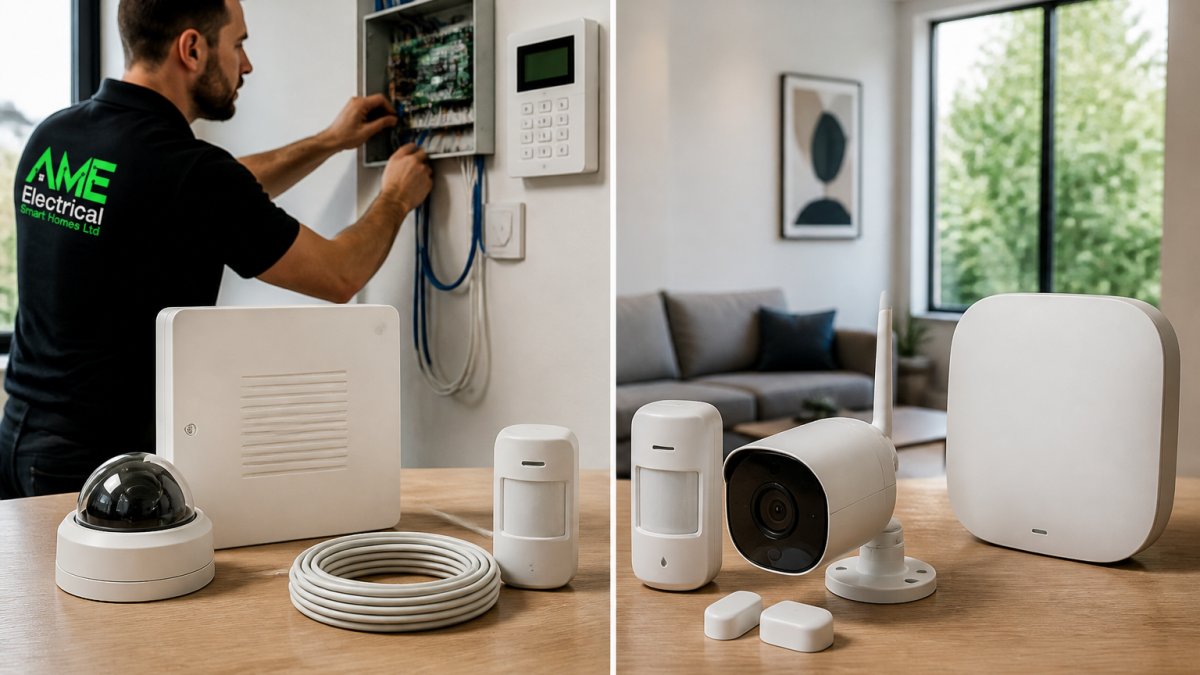
The choice between wired and wireless systems affects both your installation costs and long-term ownership expenses.
Installation requirements and labour
Wired systems demand more upfront labour. Running cables through walls, installing junction boxes, and connecting everything to a central hub takes time. You’ll need conduit, cable trays, or chasing through walls depending on your home’s structure. This is where professional installation becomes essential, poor cable routing leads to future problems.
Wireless systems install faster. Sensors stick to surfaces or mount with minimal drilling. No cabling means less disruption to your home. Installation labour is lower, which appeals to budget-conscious homeowners.
However, wireless systems have hidden costs. Batteries in sensors and cameras need regular replacement. A 50-sensor system might require battery changes every 12-18 months. Over five years, these replacements add up. Wired systems eliminate this ongoing expense.
Reliability and maintenance
Wired systems offer consistent power and signal. They don’t suffer from interference or dead zones. When properly installed, they’re more stable over time. Maintenance focuses on occasional sensor cleaning and software updates.
Wireless systems are convenient but vulnerable. Wi-Fi interference, weak signals in certain rooms, and battery failures can disrupt your system. You’ll spend more time troubleshooting connectivity issues. The flexibility comes at a cost, both in reliability and maintenance effort.
A hybrid approach, wired backbone with wireless sensors for convenience, balances both advantages. This costs more initially but often delivers better long-term reliability.
Home Security System with No Monthly Fee: Understanding Ownership Models
Many homeowners assume they must pay monthly monitoring fees. That’s not always true. Understanding your options changes how you budget.
Self-monitored systems
Self-monitored systems let you monitor your property without paying a professional monitoring company. You receive alerts on your phone when sensors trigger. You decide whether to call the police or investigate yourself.
This approach has no monthly fee. Your costs are hardware and installation only. It works well for tech-savvy homeowners who are home regularly or can respond quickly to alerts. If you travel frequently or can’t respond to alerts promptly, self-monitoring creates gaps in your protection.
The trade-off is responsibility. You’re on call 24/7. False alarms mean you’re the one responding or calling authorities. Insurance companies often offer discounts for professionally monitored systems, not self-monitored ones, which can offset the monthly cost.
Professional monitoring options
Professional monitoring companies respond to your alarms around the clock. When a sensor triggers, they verify the alarm and contact emergency services if needed. This costs a monthly fee, but it provides peace of mind and often qualifies for insurance discounts.
Some systems offer hybrid monitoring. You monitor during the day; professionals take over at night or when you’re away. This balances cost and protection. You pay less than full professional monitoring but gain coverage when you’re most vulnerable.
The key question: does the insurance discount cover the monitoring cost? For many homeowners, it does. Check with your insurer before deciding.
Local Storage Security Cameras: Privacy and Cost Benefits
Cloud storage for security footage costs money every month. Local storage, cameras recording directly to a hard drive or network-attached storage in your home, eliminates this expense.
Local storage means your footage never leaves your property. No cloud subscription. No reliance on internet bandwidth. No data privacy concerns about your footage sitting on someone else’s servers. This appeals to privacy-conscious homeowners and businesses handling sensitive information.
The trade-off is accessibility. Cloud systems let you view footage from anywhere. Local storage requires you to be on your home network or use a VPN. For most homeowners, this isn’t a problem. For business owners or frequent travellers, it’s less convenient.
Cost-wise, local storage wins long-term. You buy the storage hardware once. Cloud storage compounds, small monthly fees add up over years. A system recording 24/7 might cost significantly more over five years in cloud fees than a one-time local storage investment.
Local storage depends on your internet connection staying stable. If your broadband fails, you lose real-time alerts. Cloud systems continue working even if your local network drops. Choose based on your reliability needs.
Total Cost of Ownership: Beyond Installation
The price you pay on installation day isn’t your final cost. Long-term ownership brings additional expenses.
Maintenance and repairs
Wired systems need occasional maintenance. Cables degrade over decades. Connectors corrode. Sensors fail. A professional service contract, or at least access to one, saves headaches when something breaks.
Wireless systems require battery replacement. A 50-sensor system might need 100 batteries over three years. That’s a recurring cost most people underestimate.
Both systems benefit from regular testing. Professional installers recommend annual checks to ensure everything works. This catches problems before they become emergencies.
System upgrades and expansion
Your needs change. You add a new wing to your home. You upgrade to smarter cameras. You integrate with new systems. Expansion costs depend on your original system’s design.
A modular system designed for growth costs less to expand. A rigid, proprietary system costs more. This is why working with specialists like AME Electrical matters, we design systems that grow with you rather than forcing expensive replacements.
Planning Your Integrated Security Budget
Start by defining what you actually need. A small flat needs different protection than a five-bedroom house with grounds. A holiday home needs different monitoring than your primary residence.
List your requirements:
- How many entry points need sensors?
- How many cameras do you want?
- Do you need professional monitoring?
- What smart home integration matters to you?
- Do you prefer wired or wireless?
- Will you use cloud or local storage?
Once you’ve defined your needs, get quotes from certified installers. Prices vary significantly based on your home’s specifics. What costs £5,000 for one property might cost £8,000 for another with the same system, labour differs based on your home’s layout and condition.
Ask installers about long-term costs, not just installation. A cheaper upfront system that requires expensive batteries or monitoring fees might cost more over five years. Total cost of ownership matters more than the initial quote.
Homeowners building new or renovating extensively should plan integrated security early. Running cables during construction costs far less than retrofitting later. Working with specialists during the design phase prevents costly mistakes.
Conclusion
Understanding integrated security system cost means looking beyond the installation price. Hardware, labour, monitoring choices, and long-term maintenance all factor in. Wired systems cost more to install but less to maintain. Wireless systems install quickly but require ongoing battery investment.
The right choice depends on your home, your needs, and your priorities. At AME Electrical, we specialise in designing integrated security systems that balance upfront costs with long-term reliability. Our certified KNX and Nice installers ensure your system integrates seamlessly with your other smart home systems.
British Standards Institution guidance on security system design recommends professional design and installation for integrated systems. National Security Inspectorate standards for alarm systems sets industry standards for professional monitoring. Which? guidance on home security systems offers consumer perspectives on system choices and reliability.
Get a quote from AME Electrical and discover how integrated security protects your home while simplifying your life.
Frequently Asked Questions
How much does an integrated security system cost for a home?
The cost of an integrated security system varies significantly based on your home’s size, the number of entry points, desired features, and whether you choose wired or wireless components. Factors include hardware selection, professional installation labour, integration complexity with existing systems, and ongoing monitoring preferences. Obtain a personalised quote from a certified installer to understand costs specific to your property and requirements.
Can home security cameras work without cloud storage?
Yes. Local storage security cameras record footage directly to on-site devices such as network-attached storage (NAS) systems, solid-state drives, or dedicated recorders. This approach eliminates cloud subscription fees, enhances privacy by keeping footage on your property, and ensures access to recordings even during internet outages. Local storage is particularly popular for homeowners seeking independence from cloud providers and greater control over their data.
Is wired or wireless home security cheaper to install?
Wireless systems typically have lower installation costs because they require no structural modifications or extensive cabling work. Wired systems demand professional installation to run cables through walls and connect to central hubs, increasing labour costs. However, wired systems often prove more reliable long-term and may reduce future maintenance expenses. Your choice depends on your home’s layout, renovation stage, and preference for reliability versus upfront affordability.
Do integrated home security systems have monthly fees?
It depends on your setup. Self-monitored systems with local storage and no professional monitoring typically have no monthly fees, only initial hardware and installation costs. Systems using professional 24/7 monitoring services do charge monthly fees. Cloud-based storage and remote access features may also incur subscriptions. Discuss monitoring and storage options with your installer to choose a model matching your budget and security needs.