
Table of Contents
- What Future-Proof Home Wiring Actually Means
- Smart Home Wiring Requirements for Modern Homes
- Pre-Wiring for Smart Home Systems: Planning Ahead
- Conduit for Future Wiring: Why It Matters
- Home Wiring Renovation Checklist: What to Assess
- Long-Term Value: Does Future-Proof Wiring Pay Off?
- Conclusion
- Frequently Asked Questions
Last Updated: October 17, 2026
What Future-Proof Home Wiring Actually Means
Future-proof home wiring is electrical infrastructure designed to accommodate new technologies, higher power demands, and evolving smart home systems without requiring complete rewiring. It’s about building flexibility into your home’s electrical foundation today so you can adapt tomorrow.
Think of it as creating pathways for technology rather than hardwiring specific systems. Instead of running individual cables for each device or smart system, future-proof wiring uses conduit, larger capacity circuits, and strategic planning to handle whatever comes next.
At AME Electrical, we’ve worked with homeowners and commercial clients who installed basic electrical systems only to find themselves needing expensive renovations five years later. The cost of retrofitting is always higher than planning ahead. Future-proof wiring isn’t about predicting exactly what technology you’ll use, it’s about giving yourself options.
The core principle is simple: install infrastructure that’s flexible enough to support multiple systems, technologies, and power requirements without tearing into walls. This might mean running empty conduit alongside your current wiring, installing larger capacity panels, or creating dedicated zones for smart home integration.
Smart Home Wiring Requirements for Modern Homes
Modern smart homes need more from their electrical infrastructure than homes built even five years ago. Lighting control systems, climate automation, security networks, and entertainment systems all demand reliable power and data pathways.
A properly planned smart home wiring system should include:
- Dedicated circuits for high-demand devices like smart HVAC systems and security networks
- Data pathways separate from power lines to avoid interference
- Access points throughout the home for future device installation
- Backup power considerations for critical systems like security and emergency lighting
- Earthing and surge protection to safeguard sensitive electronics
The challenge most homeowners face is that smart home requirements change faster than building regulations catch up. What’s standard today might be outdated in three years. This is where future-proof planning becomes essential.
Many homes built before 2020 simply don’t have the electrical capacity or infrastructure for modern smart systems. Adding a few smart devices works fine, but comprehensive home automation requires proper foundational wiring. Running cables through walls after the fact is disruptive, expensive, and often impossible without significant structural work.
Plan your smart home wiring during renovation or new build phases. Retrofitting is three to five times more expensive than planning ahead, and often requires wall opening that damages finishes.
Pre-Wiring for Smart Home Systems: Planning Ahead
Pre-wiring for smart home means installing the infrastructure before you’ve committed to specific systems or devices. It’s about creating the skeleton that any smart home system can hang on.
Effective pre-wiring includes:
- Running empty conduit through walls and ceilings for future cable runs
- Installing junction boxes at strategic points (each room, hallways, key areas)
- Creating a central hub location for system controllers and network equipment
- Running separate data and power pathways to prevent electromagnetic interference
- Installing backup circuits for critical systems
The timing matters significantly. Pre-wiring during new construction or major renovation is straightforward. Adding it later requires either surface-mounted conduit (visible) or wall opening (disruptive and costly).
Many homeowners ask whether they should pre-wire for systems they don’t yet own. The answer is yes, but selectively. You won’t use every conduit or circuit you install, and that’s fine. The cost of installing empty conduit is minimal compared to the cost of running cables through finished walls later.
AME Electrical recommends thinking about pre-wiring in zones. A kitchen might need more circuits for smart appliances. A bedroom might prioritise data pathways for entertainment systems. A hallway might focus on lighting control infrastructure. This zonal approach lets you prioritise spending where it matters most.
Conduit for Future Wiring: Why It Matters
Conduit for future wiring is plastic or metal tubing that creates empty pathways through your home’s walls and ceilings. These pathways let you run new cables years later without opening walls or drilling through finished surfaces.
Conduit serves several purposes:
- Protection: Shields cables from damage, moisture, and rodents
- Flexibility: Lets you change cable types or add new systems without reconstruction
- Future-proofing: Accommodates technology upgrades you can’t yet predict
- Regulations compliance: Meets building regulations for cable routing and safety
- Easy replacement: When cables age or fail, you can pull new ones through existing conduit without wall damage
The type of conduit matters. PVC works for most residential applications and costs less. Metal conduit offers better protection and electromagnetic shielding, important for data lines near power cables. Flexible conduit suits tight spaces and corners.
Many electricians skip conduit to save money on initial installation. This is false economy. The cost difference is minimal during construction but becomes enormous during retrofit work. A single wall opening in a finished home can cost more than running conduit through the entire structure during the build phase.
Sizing conduit correctly is crucial. Too small and you can’t fit cables later. Too large and you waste space. Standard practice is to run conduit sized for 25-30% more capacity than your current needs, giving room for future additions.
Home Wiring Renovation Checklist: What to Assess
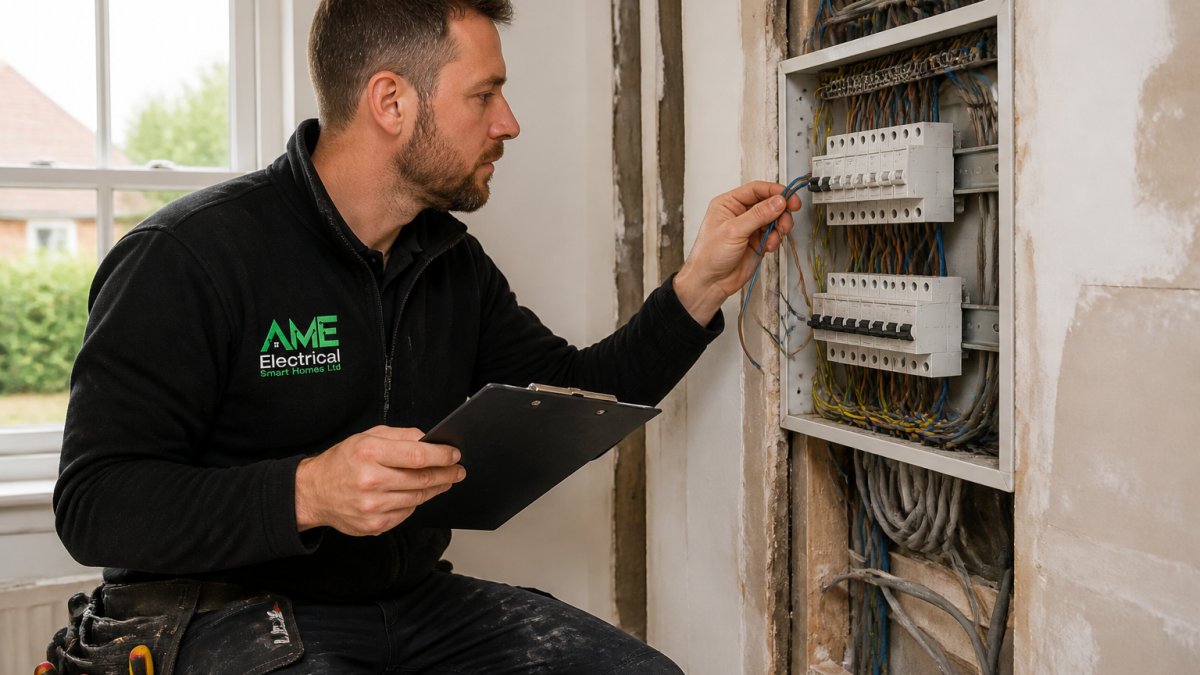
Before upgrading your home wiring for future-proofing, assess what you currently have. This checklist helps identify what needs attention:
Electrical panel capacity:
- Does your panel have space for new circuits?
- Is it rated for modern demands (typically 100-200 amps for homes)?
- Has it been updated in the last 10-15 years?
Existing wiring condition:
- Are cables properly earthed?
- Any visible damage, discolouration, or signs of overheating?
- Does wiring match current standards?
Circuit distribution:
- Do you have dedicated circuits for high-demand areas?
- Are circuits balanced across phases?
- Any circuits regularly tripping breakers?
Data infrastructure:
- Do you have structured cabling for internet and networks?
- Is there conduit available for future data runs?
- Are data and power lines properly separated?
Future access points:
- Can you easily access key areas for new installations?
- Are there junction boxes at logical points?
- Is there central location suitable for smart home hub?
Earthing and surge protection:
- Is your system properly earthed?
- Do critical circuits have surge protection?
- Are sockets properly polarised?
This assessment should guide your renovation priorities. Some homes need complete panel upgrades. Others mainly need conduit installation and circuit additions. Understanding what you have prevents overspending on unnecessary work.
Never attempt electrical assessment yourself if you’re not qualified. Poor assessment leads to undersized systems that fail under load or create safety hazards. Hire a qualified electrician for inspection.
Long-Term Value: Does Future-Proof Wiring Pay Off?
Whether future-proof home wiring is worth it depends on your timeline and plans. For homeowners staying 10+ years, the value is clear. For those planning to move in five years, the calculation changes.
Arguments for future-proof wiring:
Future-proof wiring eliminates expensive retrofitting. When you want to add smart systems, upgrade security, or install new technology, the infrastructure is already there. This saves thousands in labour and wall damage.
It increases home value. Buyers of modern homes expect smart home capability and proper electrical infrastructure. Homes with professional-grade wiring command premium prices.
It reduces disruption. Adding systems to properly wired homes takes days, not weeks. There’s no wall opening, no dust, no structural damage to repair.
It accommodates changing needs. Your requirements will evolve. Future-proof wiring lets you adapt without major renovation.
Arguments against:
The upfront cost is higher. Installing conduit, larger panels, and extra circuits costs more initially. If you never use the extra capacity, that money was spent unnecessarily.
Technology changes unpredictably. The smart home systems you plan for might become obsolete. You might prefer different platforms than you anticipated.
Oversizing creates waste. Running conduit everywhere “just in case” means some infrastructure never gets used.
The practical answer:
Future-proof wiring makes sense for:
- New construction or major renovation
- Homes where you plan to stay 10+ years
- Properties with smart home ambitions
- Commercial spaces requiring flexibility
- Homes in areas with frequent technology upgrades
It’s less critical for:
- Short-term rentals or investment properties
- Homes with no smart home interest
- Properties with very limited budgets
- Situations where you’re only adding one or two specific systems
AME Electrical typically recommends future-proofing during any major electrical work. The incremental cost is modest, but the long-term flexibility is significant.
Homeowners planning to stay in their property for 10+ years, particularly those in areas with frequent technology updates and those who value adaptability and avoiding future disruption.
Conclusion
Future-proof home wiring is worth considering seriously if you’re undertaking renovation or new construction. The question isn’t whether to future-proof, but how much infrastructure to install given your timeline and budget.
The real cost of not planning ahead reveals itself when you want to add smart systems and discover your electrical infrastructure can’t support them. Wall opening, rewiring, and panel upgrades then cost far more than installing conduit and capacity during initial work.
At AME Electrical, we work with homeowners and commercial clients to design wiring systems that adapt to their needs, today and tomorrow. Whether you’re planning a comprehensive smart home integration or simply want flexibility for future upgrades, proper infrastructure planning pays dividends.
If you’re considering electrical upgrades or renovation, the time to plan for future-proofing is now. Get A Quote from our team to assess your current infrastructure and explore how future-proof wiring can simplify your home’s evolution.
Frequently Asked Questions
What does future-proof home wiring mean?
Future-proof home wiring means installing infrastructure that supports current and anticipated technology upgrades without requiring major rewiring. This includes adequate conduit, spare cable runs, robust power distribution, and structured cabling systems designed to accommodate smart home, security, and entertainment systems. The goal is to future-proof your electrical system so new devices and technologies can integrate seamlessly as your needs evolve.
Is it worth pre-wiring a home for smart technology?
Pre-wiring for smart home systems during construction or renovation is typically more cost-effective than retrofitting later. Installing conduit, running spare cables, and planning for smart home wiring requirements upfront avoids the disruption and expense of wall opening and remedial work. If you anticipate adding lighting control, security, or climate systems, pre-wiring protects your investment and keeps future upgrades straightforward.
Can my existing home wiring support smart-home devices?
Existing home wiring can often support smart-home devices, but it depends on your current infrastructure. Older properties may lack the conduit for future wiring or adequate power distribution. A professional assessment identifies whether you need supplementary cabling, upgraded circuits, or new conduit runs. Many smart home wiring requirements can be met without complete rewiring, though older properties may need targeted upgrades.
Should I install conduit when renovating?
Installing conduit for future wiring during renovation is a sound investment. Conduit protects cables, allows easy replacement or addition of new wiring, and simplifies future smart home upgrades. It’s significantly cheaper to install during renovation when walls are open than to retrofit later. Conduit also future-proofs your home against technology changes and reduces the risk of costly emergency rewiring.