
Last Updated: 26 October 2026
Quick Summary
Smart climate control listed buildings work best with wireless, non-invasive systems like KNX automation or wireless retrofit controllers that integrate with existing heating infrastructure without requiring structural alterations or extensive rewiring. These solutions prioritise reversibility and comply with listed building consent requirements whilst delivering modern comfort and efficiency.
- Wireless thermostats eliminate visible cabling, the biggest barrier to listed building consent approval.
- KNX is an open standard that integrates heating, lighting, security and access control through one intelligent network.
- Contact your local planning authority before specifying any smart heating system to confirm whether consent is required.
- Compatibility with your existing boiler is non-negotiable; most older systems lack the electrical interfaces modern smart thermostats expect.
- Hire a professional smart home integrator experienced with listed building constraints rather than a general electrician.
Table of Contents
- Smart Climate Control Systems for Listed Buildings: What Makes Them Different
- Listed Building Consent for Heating Controls: What You Need to Know
- Smart Heating Controls for Listed Buildings: Wireless and Non-Invasive Options
- Smart Thermostats for Old Houses: Compatibility and Installation Considerations
- Wireless Heating Controls for Traditional Homes: Integration Without Disruption
- Key Strengths and Limitations of Leading Smart Climate Solutions
- Planning Your Listed Building Climate Control Upgrade with AME Electrical
- Frequently Asked Questions
Smart Climate Control Systems for Listed Buildings: What Makes Them Different
Smart climate control listed buildings operate within constraints standard residential systems don’t account for. Heritage properties, Georgian townhouses, Victorian terraces, period cottages, demand a fundamentally different approach to heating than modern homes. The challenge is technical, regulatory and architectural.
Most discover quickly that the smart thermostat they read about online often won’t work in a listed building without significant compromise, for structural, regulatory and practical reasons.
Listed buildings have strict conservation requirements. Any modification, even something as seemingly simple as installing a new boiler or running new pipework, may require listed building consent from your local authority. This isn’t bureaucratic theatre; it exists to preserve the character and integrity of properties deemed architecturally or historically significant. A smart heating system that requires visible wall-mounted hardware, extensive rewiring, or structural alterations can be rejected outright.
Beyond consent, there’s physical reality: solid-stone walls resist standard installation, and period features, ornate plasterwork, original fireplaces, heritage windows, constrain equipment placement. Older heating systems, often conventional boilers or oil tanks, weren’t designed for smart integration. Retrofitting requires specialist knowledge beyond standard electrician training. Learn how to upgrade legacy electrical systems for smart tech in heritage properties.
The systems that work best in listed buildings are non-invasive, wireless where possible, and integrate with existing infrastructure rather than replacing it. They prioritise reversibility, removal without permanent marks or damage.
Listed Building Consent for Heating Controls: What You Need to Know
Listed building consent is a legal requirement in the UK for most alterations to properties on the statutory list. Heating controls fall squarely into this category, though the level of scrutiny varies depending on what you’re proposing.
The key distinction is between internal and external modifications. A wireless thermostat installed indoors, away from external walls and without visible external hardware, is far less likely to require consent than new external pipework or a visible boiler flue. But this isn’t a hard rule, requirements depend on your property, its listing grade and your local authority’s interpretation.
Before specifying any smart heating system, contact your local planning authority for guidance. Provide technical drawings showing where equipment will be mounted, what pipework will be visible and whether structural work is involved. This conversation costs nothing and can save months of delays.
Common modifications that typically do require consent include: replacing a boiler with a different type or size, installing new external pipework, adding visible thermostats or control panels to external walls, and altering the position of flues or vents. Modifications that may not require consent include: installing a wireless thermostat indoors, upgrading internal wiring for smart controls, and integrating smart sensors within existing spaces.
The safest approach is to assume consent is required and apply. The process usually takes 4-8 weeks, and applications are rarely refused if the work is genuinely reversible and doesn’t compromise the building’s character. What does get refused is work that’s visually intrusive, permanent or incompatible with the property’s heritage status.
Smart Heating Controls for Listed Buildings: Wireless and Non-Invasive Options
Wireless heating controls are the practical solution for most listed buildings because they eliminate extensive rewiring, often the biggest barrier to consent. Modern systems use radio frequency communication between thermostat, boiler control and heating zones, avoiding visible cable runs heritage properties cannot accommodate.
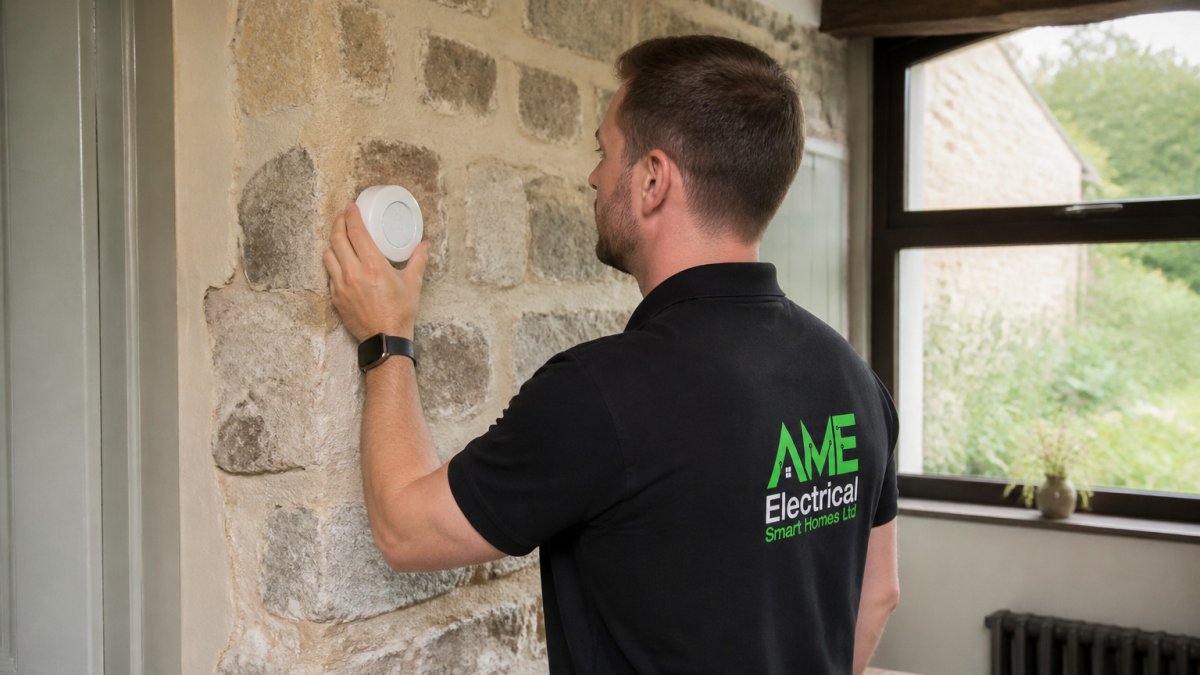
The best wireless systems operate on proven, open protocols. KNX is a European building-automation standard that works across manufacturers and integrates heating, lighting, security and access control in one system. Discover the benefits of professional KNX installation for non-invasive climate control in heritage properties.
Wireless thermostats from mainstream brands like ecobee and Google Nest can work in listed buildings, but only if your existing heating system is compatible. Many older systems aren’t. Compatibility requires either a conventional gas boiler with an OpenTherm-compatible control interface, or a system that can accept a wireless receiver module. Before you buy, verify compatibility with your boiler manufacturer; this is non-negotiable.
The constraint with wireless systems is range. Most operate effectively within 30-50 metres line-of-sight. In a large country house or a property with thick stone walls, signal reliability can degrade.
Smart Thermostats for Old Houses: Compatibility and Installation Considerations
Smart thermostats for old houses are appealing in theory but problematic in practice. The core issue is compatibility: most modern smart thermostats assume a conventional central heating system with a combi or system boiler connected to standard thermostat wiring.
Older properties often have different heating architectures: a conventional boiler with a separate hot-water cylinder, a gravity-fed system, or an oil tank or LPG boiler. These lack the electrical interfaces smart thermostats expect. Fitting a modern thermostat to an incompatible boiler is a waste of money, it won’t communicate with the heating system or control temperature.
Before you buy any smart thermostat, establish what heating system you actually have. If you’re unsure, your boiler’s manual or a qualified heating engineer can tell you. The manual should specify whether the boiler has an OpenTherm interface, the electrical standard that allows smart thermostats to communicate with modern boilers. Without it, a smart thermostat is just an expensive timer.
For non-compatible systems, don’t force-fit a mainstream smart thermostat.
Installation in listed buildings introduces additional complexity. Even if your boiler is compatible, the physical installation of a smart thermostat must meet consent requirements. A wireless thermostat mounted on an internal wall, away from period features, is usually acceptable. A wired thermostat requiring new cabling to the boiler location is far more problematic. Always check with your local authority before installation.
One often-overlooked consideration is user behaviour. Smart thermostats learn occupancy patterns and adjust heating automatically. This works well in modern homes where residents follow predictable schedules. In holiday lets, rental properties, or homes where occupancy varies wildly, the learning algorithms can struggle. Manual override becomes necessary, which defeats much of the automation benefit.
Wireless Heating Controls for Traditional Homes: Integration Without Disruption
Wireless heating controls are the most practical path for traditional homes because smart climate control listed buildings integrate with heritage properties rather than fighting their constraints. The best systems operate across multiple building services, heating, hot water, lighting, access control, through a single intelligent network.
KNX-based systems are designed specifically for building automation.
Key Strengths and Limitations of Leading Smart Climate Solutions
| System | Best For | Key Strength | Primary Limitation |
|---|---|---|---|
| KNX (professional installation) | Listed buildings, complex properties | Open standard, integrates all building services, highly reversible | Requires professional installer; higher upfront cost |
| Wireless retrofit controllers | Oil heating, non-standard systems | Works with almost any boiler; no structural work needed | Limited to heating control only; less sophisticated automation |
| Ecobee Smart Thermostat Premium | Modern compatible boilers | Air-quality monitoring, schedule learning | Requires OpenTherm interface; not suitable for older systems |
| Google Nest Learning Thermostat | Standard gas boiler systems | Intuitive app, learning algorithms | Compatibility constraints; limited for heritage properties |
| Sensibo AC Control & Energy | Air-conditioning systems | Dedicated AC control; energy tracking | Not a heating solution; requires compatible AC unit |
**
KNX systems coordinate lighting, security and access control through one intelligent network.
Planning Your Listed Building Climate Control Upgrade with AME Electrical
Upgrading climate control in a listed building requires planning across three domains: technical feasibility, regulatory compliance and long-term maintainability. Skipping any one creates problems down the line.
Start with your existing heating system. Have a qualified heating engineer assess it and confirm whether it’s compatible with smart controls. If it’s not, establish what retrofit options exist.
Next, engage your local authority early, before buying equipment or hiring a contractor. A preliminary conversation with planning officers costs nothing and often prevents costly delays. Provide technical drawings of exactly what you’re proposing and ask for written guidance on whether consent is required.
When you’re ready to proceed, hire a professional smart home integrator. This isn’t a job for a general electrician.
Consider specifying KNX for any serious smart-home project in a listed building. Hire a professional KNX installer in Ireland experienced with listed building constraints. KNX is an open standard that integrates lighting, security and access control.
Finally, plan for ongoing support. Choose an installer who commits to post-installation support.
Smart climate control in listed buildings is achievable, but it demands a different approach to standard residential heating upgrades. The systems that work best, wireless controls, KNX automation, and reversible installations, prioritise integration over disruption. They respect the heritage constraints that make these properties special whilst delivering the comfort and efficiency that modern living expects. Working with specialists who understand both the technical and regulatory landscape transforms what could be a frustrating project into a straightforward one. Get in touch for a consultation.
Frequently Asked Questions
Do you need listed building consent to install a smart thermostat?
Yes, in most cases. Listed building consent is required for any works affecting the character or appearance of a listed building, including installing visible heating controls or running new wiring. Wireless systems that avoid structural changes may require less formal consent, but you should consult your local planning authority and conservation officer before installation.
Can smart thermostats for old houses work with traditional radiator systems?
Most smart thermostats are designed for wet central-heating systems with radiators, making them compatible with older homes. However, compatibility depends on your boiler type and existing controls. Some older boilers lack the necessary wiring interfaces, requiring additional hardware. Before selecting any system, confirm compatibility with your heating setup and identify any adaptations needed.
What are the main benefits of wireless heating controls for traditional homes?
Wireless heating controls eliminate the need for new wiring runs, which is crucial in listed buildings where structural alterations are restricted. They offer room-by-room temperature management, reduce energy waste by heating only occupied spaces, and integrate with other smart-home systems. Installation is faster and less disruptive than wired alternatives, and wireless systems can be repositioned if your needs change. They also avoid the visual impact of new cables or control panels on period interiors.
What happens if a smart climate control system fails in a listed building?
AME Electrical provides ongoing support to maintain system performance.
