
Table of Contents
- Wired vs Wireless Smart Home Security: Core Differences
- Coverage and Range: Wireless Security System Range for Large Properties
- Reliability During Network Outages and Power Loss
- Hybrid Wired and Wireless Security System Approach
- Smart Home Security Without Cloud Dependency
- Security System for Multiple Buildings and Outbuildings
- Integration, Future-Proofing, and Ongoing Support
- Frequently Asked Questions
Last Updated: October 19, 2026
Wired vs Wireless Smart Home Security: Core Differences
When you’re securing a large property, choosing between wired vs wireless smart home security fundamentally shapes your installation timeline, maintenance burden, and long-term reliability. Both approaches have distinct strengths, and the right choice depends on your property’s layout, infrastructure, and tolerance for ongoing management.
How wired systems operate
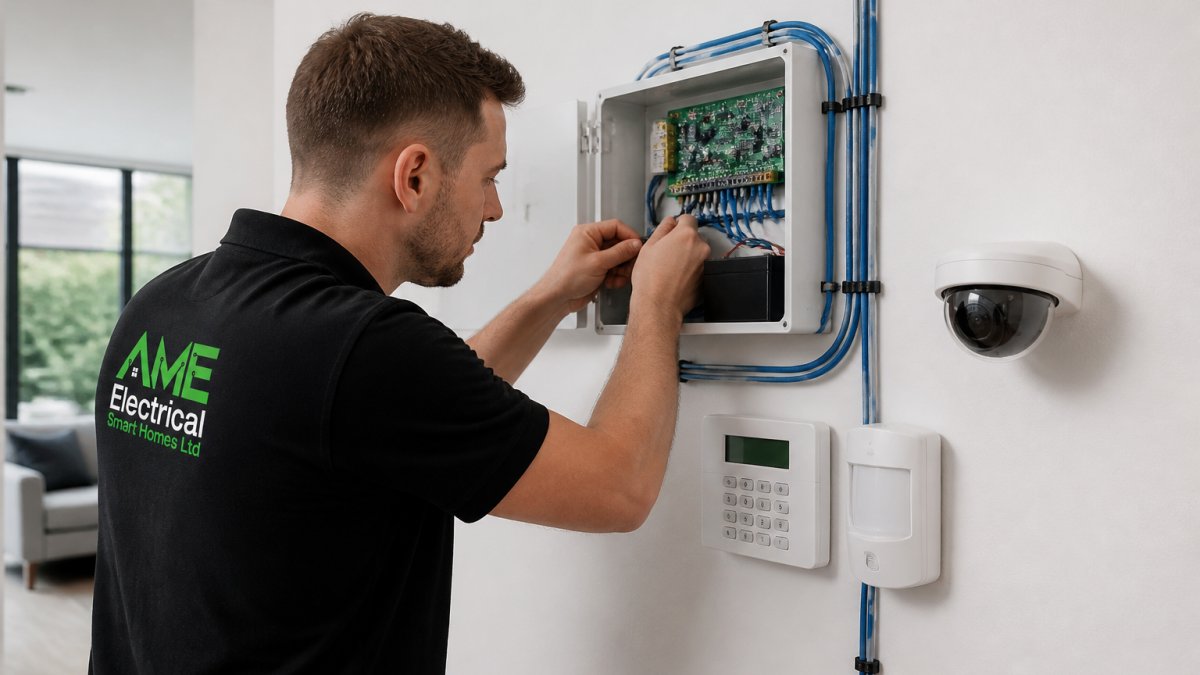
Wired security systems run hardwired connections from a central control panel to each sensor, camera, and access point. Every device draws power directly from the panel through dedicated cabling. This architecture means your system doesn’t depend on wireless signal strength or battery life. The panel itself connects to a monitoring centre via a fixed telephone line or broadband connection.
Installation requires running cables through walls, ceilings, and conduit, often a significant undertaking in existing buildings. For new construction or major renovations, wired systems integrate cleanly into the building infrastructure. Once installed, a wired system remains stable. Sensors don’t drift offline due to interference or dead batteries. The control panel is the single point of failure, but it’s stationary and manageable.
How wireless systems operate
Wireless smart home security systems communicate via radio signals, typically Wi-Fi, Zigbee, or proprietary frequencies. Each sensor and camera contains its own battery and transmitter. The hub or control panel receives these signals and relays alerts to your phone or a monitoring centre. No cables run to individual devices.
Installation is faster and less invasive. You mount sensors where you need them without worrying about cable routing. The trade-off is dependency: wireless systems require functioning batteries in every device, reliable radio signal throughout your property, and a stable internet connection (in most cases). A dead battery in one sensor creates a blind spot. Poor signal in a distant building means that device may not report reliably.
For large properties, test wireless signal strength in every corner before committing. Dead zones are common in stone buildings, metal structures, or properties with multiple floors separated by dense materials.
Coverage and Range: Wireless Security System Range for Large Properties
Wireless security system range for large properties is often the deciding factor. Most wireless hubs cover 30-50 metres in open space, but walls, metal, and dense materials reduce this significantly. A property spanning 100 metres or more may require multiple hubs or repeaters to maintain coverage.
Wired systems have no practical range limit. You run cable where you need it, and signal degradation isn’t a concern. For a sprawling estate, wired infrastructure means every corner receives the same reliable signal quality as the control room.
Wireless systems shine in retrofit situations. Adding a new sensor to a detached garage or outbuilding takes minutes. Wired systems demand cable runs, conduit, and often structural work. However, wireless coverage in large properties often requires careful planning: hub placement, repeater positioning, and sometimes multiple network segments.
The larger your property, the more wireless coverage becomes a technical problem rather than a convenience advantage.
Reliability During Network Outages and Power Loss
A wired system with a backup battery in the control panel continues operating during a power cut or internet outage. Sensors stay powered, the panel stays powered, and local alarms sound. If your monitoring contract includes mobile backup (a separate connection the panel uses if broadband fails), alerts still reach the monitoring centre.
Wireless systems are more fragile during outages. If your internet goes down and you’re relying on Wi-Fi for hub communication, local alerts may still work but remote notifications stop. Individual sensor batteries keep them broadcasting for hours or days, depending on battery type and usage. However, if the hub loses power and has no backup battery, the entire system goes silent.
For properties in areas prone to power cuts or with unreliable broadband, wired systems with mobile backup offer genuine peace of mind. The system functions independently of your internet quality. Wireless systems depend on internet availability for most of their value, remote alerts, automation, and integration with other smart home devices all vanish if connectivity drops.
Hybrid Wired and Wireless Security System Approach
A hybrid wired and wireless security system combines hardwired infrastructure for critical areas with wireless devices where convenience matters. The control panel connects wired sensors in the main building and the perimeter, then integrates wireless cameras in outbuildings, remote gates, or difficult-to-cable areas.
This approach captures the best of both: reliable coverage where it’s essential, flexible expansion where it’s not. A hybrid wired and wireless security system also simplifies upgrades. You can add wireless sensors to new areas without rewiring, while keeping the backbone hardwired and stable.
The downside is complexity. You’re managing two separate networks, troubleshooting issues on both, and paying for installation on both. Hybrid systems suit properties where the main building needs rock-solid security but outbuildings or secondary areas can accept wireless convenience.
Mixing wired and wireless requires careful integration planning. Poor hub placement can leave wireless devices unreliable even when the wired core works perfectly.
Smart Home Security Without Cloud Dependency
Smart home security without cloud dependency appeals to users concerned about privacy or service interruptions. A wired system with a local control panel and no internet requirement can function entirely offline. You arm and disarm at the panel, and alarms sound locally. The monitoring centre still needs to be contacted (typically by phone line), but your system doesn’t depend on cloud servers.
Wireless systems almost always require cloud connectivity for their advertised features. Remote arming, mobile notifications, automation rules, these all live in the cloud. Some wireless hubs offer limited local functionality if the internet drops, but you lose the convenience features that made wireless appealing in the first place.
If privacy is a priority, wired systems with local-only operation offer genuine independence. You control your data entirely. Wireless systems, by design, transmit sensor data to cloud servers operated by the manufacturer. That data is encrypted, but it exists outside your property.
Security System for Multiple Buildings and Outbuildings
A security system for multiple buildings and outbuildings demands careful architecture. Wired systems can extend to multiple structures through underground conduit, but cable runs become expensive and labour-intensive. A property with a main house, guest cottage, barn, and workshop means significant trenching and installation work.
Wireless systems handle this elegantly, until they don’t. Each building needs either a hub of its own or reliable signal from the main hub. Multi-building properties often require repeaters or mesh networks to maintain coverage. This adds cost and complexity but avoids the disruption of cable installation.
Properties with multiple buildings often benefit from a hybrid approach: wired infrastructure within each building, with wireless links between them. This keeps installation manageable whilst maintaining reliability where it matters most.
Integration, Future-Proofing, and Ongoing Support
Modern wired systems integrate with smart home platforms through a networked control panel. You can automate lighting, heating, and access control alongside security. However, wired systems are less flexible for upgrades. Adding a new device type often means adding new wiring.
Wireless systems integrate more easily with popular smart home ecosystems (Apple Home, Google Home, Alexa). New devices pair wirelessly without infrastructure changes. However, wireless systems become obsolete faster as manufacturers discontinue models and cloud services shut down. A wired system installed 15 years ago still functions. A wireless system from 10 years ago may not integrate with current platforms.
Future-proofing matters on large properties where replacement is costly. A wired backbone remains relevant for decades. Wireless devices need periodic replacement as batteries degrade and manufacturers stop supporting older hardware.
Ongoing support is critical. At AME Electrical, we provide comprehensive support to maintain optimal performance. Wired systems require occasional sensor replacement and battery backup testing. Wireless systems demand more frequent attention: battery replacement, signal troubleshooting, and firmware updates. Budget for ongoing maintenance differently depending on which approach you choose.
Choosing between wired and wireless security for a large property isn’t straightforward. Wired systems offer stability, independence, and longevity. Wireless systems provide convenience and faster installation. The best solution often combines both, hardwired where reliability is essential, wireless where flexibility matters.
At AME Electrical, our certified team specialises in designing integrated security systems tailored to your property’s specific needs. We handle everything from consultation and design through installation and ongoing support, ensuring your system remains reliable and future-ready. Learn more about integrated smart home security systems to explore how we simplify complex security infrastructure for large properties.
Frequently Asked Questions
Is wired or wireless security better for a large property?
Neither is universally better, it depends on your property layout, existing infrastructure, and priorities. Wired systems offer superior reliability and no range limitations, making them ideal for properties with multiple buildings or complex layouts. Wireless systems provide flexibility and faster installation but may face range constraints. Many large properties benefit from a hybrid approach combining both technologies for comprehensive coverage and resilience.
Can a wireless security system work without cloud services?
Yes. Local-only smart home security systems store data and operate through a hub on your property without relying on cloud connectivity. This approach enhances privacy and ensures your system functions even during internet outages. However, remote access and mobile notifications typically require cloud integration or a dedicated app. A professional installer can help you design a system that balances local control with the remote features you need.
How can I secure multiple buildings on my property with one system?
Wired systems excel at multi-building security because they use dedicated cabling to connect all structures to a central hub, eliminating range issues. Wireless systems struggle across multiple buildings unless you install multiple hubs or use signal repeaters. A hybrid approach, wired backbone connecting buildings with wireless sensors at each location, often delivers the best balance of coverage, reliability, and cost-effectiveness for larger estates.
What happens to my security system if the internet goes down?
Wired systems with local processing continue operating fully during internet outages, maintaining all security functions. Wireless systems also operate locally but may lose remote access and mobile alerts if cloud-dependent. Systems designed for offline operation store events locally and sync when connectivity returns. Discuss backup options with your installer, including battery backup, local storage, and failover connectivity, to ensure protection during extended outages.