
Last Updated: November 22, 2026
Quick Summary
Does smart home tech increase property value? Research suggests smart-home features may improve property values by around 3% to 5%, but the outcome depends heavily on the property, the buyer and the quality of the installation. Treat smart upgrades as a marketing and liveability investment first, and a value investment second.
- Heating controls and security tend to return the most perceived value per pound spent.
- Valuers work from comparable sold prices, so smart tech rarely appears as a separate line.
- Integrated wiring and commissioned control gear are more likely to be treated as part of the property.
- Transfer manufacturer accounts to the buyer’s email and reset personal data before completion.
- Favour systems that work without a paid subscription to avoid looking like a liability.
Table of Contents
- Does Smart Home Tech Increase Property Value?
- Smart Home Upgrades That Increase Property Value
- Smart Home Features Buyers Want
- Smart Thermostat Property Value: Heating Controls That Pay Back
- Valuation, Mortgages and the Limits of Smart Home Value
- Smart Home Technology Before Selling: A Handover Checklist
- Running Costs, Privacy and the Risks Buyers Weigh Up
- Planning a Smart Home Upgrade With AME Electrical
- Frequently Asked Questions
Does Smart Home Tech Increase Property Value?
So does smart home tech increase property value? The short answer is: somewhat, but rarely pound for pound. Research summarised by the Home Improvement Research Institute’s 2026 smart home market analysis suggests smart-home features may improve property values by around 3% to 5%, while the same body of work notes that the outcome depends heavily on the property, the buyer and the quality of the installation.
Below, we break down what the evidence actually supports, which upgrades tend to hold their value, and how to prepare a system for sale without overspending.
What the evidence actually says
Smart home technology is a set of connected devices and systems, such as heating controls, lighting, security and access, that communicate with each other and can be managed remotely or automatically. The valuation evidence around it is thinner than most sales pages admit.
The often-quoted 3% to 5% figure comes with caveats attached. It reflects buyer perception in survey work, not sold-price data, and it does not tell you whether a £2,000 installation returns £2,000.
For a fuller breakdown of how integrated electrical systems feed into value, see our guide to integrated electrical systems and property value.
Appeal versus valuation: why the two diverge
Buyer appeal and property valuation are not the same thing, and confusing them is the most common mistake we see sellers make.
A valuer works from comparable sold prices, floor area, condition and location. A smart thermostat does not appear in that calculation the way a new kitchen does. What smart features do affect is how quickly a property attracts interest and how memorable it is against similar listings.
So the practical framing is this: treat smart upgrades as a marketing and liveability investment first, and a value investment second.
Smart Home Upgrades That Increase Property Value
Some categories carry their weight better than others. The table below summarises how we would rank them for a typical resale within the next few years, and the mechanism by which each one either recovers cost or fails to.
| Category | Likely value impact | How it recovers cost | Best for | Watch out for |
|---|---|---|---|---|
| Smart heating controls | Moderate, via running-cost appeal | Energy savings during ownership plus buyer appeal at sale | Most homes with gas or heat pump systems | Poor zoning design limits savings |
| Smart lighting control | Low to moderate | Perceived quality in premium listings; little direct resale recovery | High-end and period renovations | Cheap dimmers fail with LED loads |
| Security and access | Moderate | Buyer appeal and insurance-friendly features; partial recovery | Unattended and rental properties | Subscription-dependent cameras |
| Integrated whole-home systems | Moderate to high | Expectation-matching in premium stock; recovery depends on documentation | New builds and luxury projects | Requires certified installation |
| Connected appliances | Low | Rarely recovers cost; dates quickly | Kitchen-led renovations | Short product support lifecycles |
Investment-to-value ratios by category
Think in ratios rather than promises, and separate financial payback from perceived value. Heating controls and security tend to return the most perceived value per pound spent, because buyers understand them instantly and they lower running costs.
A useful discipline is to write down, for each upgrade, three figures: what it costs to buy and install, what it is likely to save in running costs each year, and what a buyer would plausibly pay for it at resale. Heating controls are often the category where running-cost savings alone can help justify the spend during ownership, with resale appeal as a bonus. Security sits next, where the appeal is partly insurance-related and partly peace of mind. Lighting and appliances rarely clear the bar on financial grounds alone and should be justified as liveability improvements.
Watch out: a system that needs a paid cloud subscription to keep working can look like a liability to a buyer, so factor the ongoing fee into any payback calculation rather than treating the purchase price as the whole cost.
Matching the upgrade to the property
The ratio also depends on the property. In a period home with solid walls and older wiring, the cost of making a system work cleanly can swallow the perceived uplift, so scope the electrical work first. In a new build or a recent renovation, the wiring and containment are usually already there, and integration costs fall accordingly. For a fuller breakdown of how integrated electrical systems feed into value, see our guide to integrated electrical systems and property value.
Smart Home Features Buyers Want
The features that move buyers are the ones they can operate in thirty seconds during a viewing.
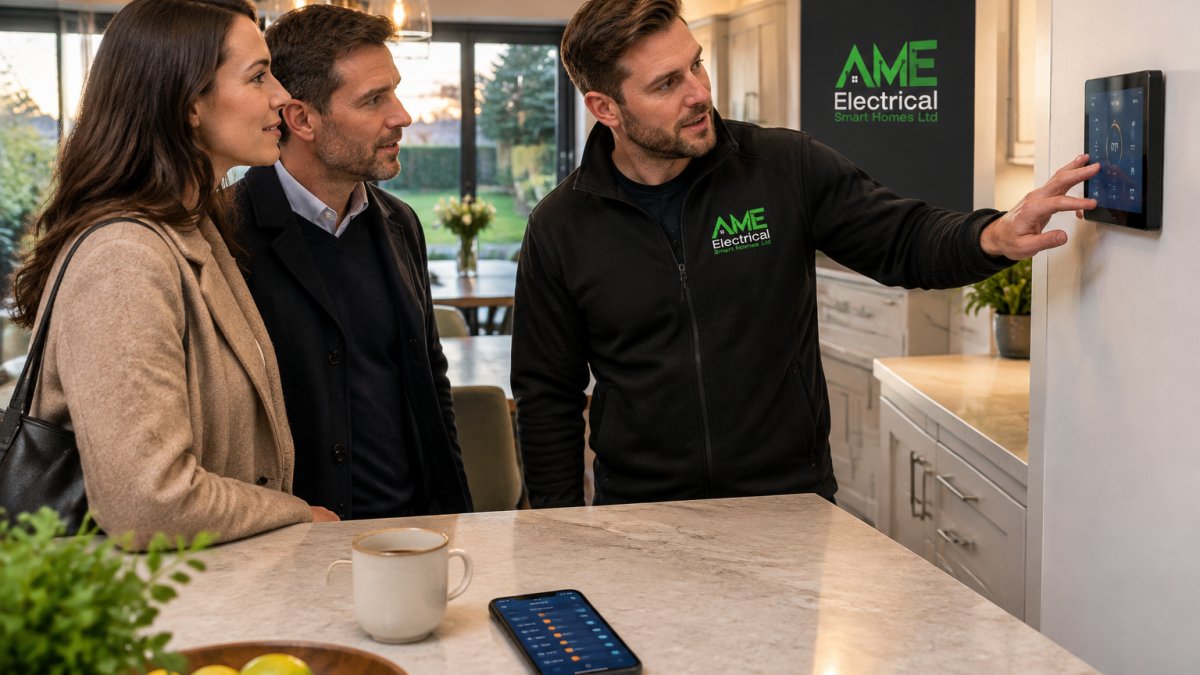
Our advice is to prioritise interoperability. Systems built on open standards can talk to each other and to whatever the buyer adds later, which keeps the installation useful rather than orphaned.
Smart Thermostat Property Value: Heating Controls That Pay Back
Heating controls are the strongest case in the whole category. A smart thermostat gives buyers a visible, understandable benefit: lower energy consumption and a home that is warm when they arrive.
Professional fitting matters more than the box. Correct wiring, zoning and commissioning determine whether the controls actually save energy or merely look modern. If you want the practical detail, our guide explains how long smart thermostat installation takes and what affects the timing.
Valuation, Mortgages and the Limits of Smart Home Value
Lenders and valuers treat smart systems conservatively, and understanding why helps set a realistic plan.
A residential valuer works from comparable sold prices, floor area, condition and location. The valuation is a professional opinion of what the property would achieve in the open market, supported by evidence of similar sales. Smart technology rarely appears as a separate line in that calculation because there is seldom a body of comparable sold evidence to support an uplift.
Removable versus integrated systems
The distinction that matters most to a valuer is whether the system is part of the fabric of the building or a set of removable devices. A smart thermostat, a doorbell camera or a plug-in hub can be unplugged and taken away, so a valuer is unlikely to attribute value to them.
Watch out: if the system depends on your personal account, your subscription or your login, a valuer may reasonably treat it as removable, so document the installation and confirm that ownership can transfer cleanly.
How lenders view the collateral
Mortgage lenders focus on the property’s fundamental security as collateral, not on the technology inside it. Their concern is whether the property is readily saleable and whether the works have been carried out safely and to standard. That is why certification matters: electrical installation certificates, building regulations completion where relevant, and manufacturer commissioning records all support the lender’s view of the property as sound collateral. A system installed without documentation can raise questions rather than add appeal.
What this means for your budget
The limit, then, is this: smart home technology can support an asking price and speed up a sale, but it will not rescue a property priced above its comparables, and it will not support borrowing against an expected uplift that a valuer is unlikely to recognise. Budget accordingly, treat the spend as a marketing and liveability investment first, and keep the paperwork that lets a valuer and a lender see the installation as part of a well-maintained property rather than a collection of gadgets.
Smart Home Technology Before Selling: A Handover Checklist
A system that cannot be handed over cleanly becomes a liability at exactly the wrong moment. Use this checklist before your first viewing:
- Write a one-page system summary: what each device does and which app controls it
- Transfer all manufacturer accounts to the buyer’s email at completion
- Reset and remove your personal data from cameras, doorbells and hubs
- Label the consumer unit so the buyer’s electrician knows what feeds what
- Leave the original manuals and any commissioning certificates
- Confirm the buyer can add devices without a paid subscription
- Give a short walkthrough, or record a five-minute video
If you are weighing whether to upgrade wiring before a sale, our guide to future-proof home wiring covers the costs and how to judge whether it is worth it.
Running Costs, Privacy and the Risks Buyers Weigh Up
Subscriptions are the quiet deal-breaker. A camera system that stops recording when a monthly fee is cancelled looks very different to a buyer than one that works locally. Our guide to smart climate control without a monthly subscription explains how to set that up.
Privacy is the other risk. Cameras and hubs hold personal data, and a buyer inheriting an account they cannot control is a genuine concern. Clear the data, transfer ownership properly, and document what you have done. For rental and leasehold properties, check consent requirements before installing anything that alters the fabric of the building.
Planning a Smart Home Upgrade With AME Electrical
The sensible approach is a prioritised, low-regret plan: start with heating controls and security, which buyers understand and which pay back in use, then add integration only where the property justifies it. That ordering protects your budget and keeps every stage useful on its own.
At AME Electrical, our certified KNX and Nice installers design and commission integrated systems for private homes, developers and hospitality projects, from consultation through to ongoing support. We are happy to assess what is worth doing before a sale, and what can wait. Book a smart home system audit to get a clear view of your options.
The real challenge is not choosing devices; it is knowing which upgrades a buyer will actually value and which will date before you sell. AME Electrical can help you make that call with a design-led assessment, certified installation and ongoing support that keeps the system working long after handover.
Frequently Asked Questions
Does smart home technology increase property value?
It can, but not by as much as many sellers assume. Research suggests smart features may support values, while other commentary argues equipment often improves buyer appeal without lifting the valuation by the amount spent. The realistic position is that smart home value depends on integration quality, how easy the system is to use, and whether the buyer actually wants it. Well-installed heating controls and security tend to hold appeal; a cabinet of mismatched hubs rarely does.
Which smart home features buyers want most?
Heating controls, security and lighting come up most often. A smart thermostat gives visible control over energy bills, smart locks and cameras address safety, and lighting control adds convenience without demanding much from the buyer. Buyers are cooler on novelty devices with subscriptions attached. The pattern is consistent: features that work quietly, need no app tutorial and survive a change of owner are the ones that support smart home value at the viewing stage.
Do smart thermostats add value to a property?
The smart thermostat property value case rests on running costs rather than headline valuation. A thermostat that zones heating and cuts wasted run time gives a buyer something measurable to weigh against energy bills. Valuers rarely adjust a figure for the thermostat itself, but estate agents can use documented energy savings as a selling point. Keep the installer’s commissioning notes and any efficiency figures so the claim is evidenced rather than assumed.
Should you install smart home technology before selling?
Only where it removes friction. Smart home technology before selling works best as a tidy-up: consolidate apps, label the consumer unit, leave a simple handover guide and fix anything that no longer responds. A full retrofit weeks before listing rarely recoups its cost. If a system is half-finished, either complete it properly through a certified installer or remove it, because a partly working setup reads to buyers as a problem to inherit.
