
Last Updated: November 26, 2026
Quick Summary
Yes, most older buildings can take a smart lighting retrofit without a full rewire. It means adding connected controls to existing lights, using smart bulbs, smart switches or retrofit modules, so you can switch, dim or schedule them from a phone or voice assistant.
- Start by checking whether each switch back box contains a neutral wire, as many older circuits lack one.
- Smart bulbs need no electrical work but mean the wall switch must stay on.
- Two-wire smart switches or retrofit modules suit circuits without a neutral.
- Rubber or cloth-sheathed cable, missing RCD protection or overheating signs need an electrician before adding any device.
- Listed buildings may need consent from the local planning authority before changes to fittings or fabric.
Table of Contents
- What Smart Lighting Retrofit Means for an Older Building
- Common Challenges in Historic and Older Buildings
- Checklist: Evaluating Your Existing Wiring
- Smart Bulbs for Existing Light Fittings
- Smart Switches Without a Neutral Wire
- Retrofit Smart Lighting Without Rewiring: Methods Compared
- Wireless Lighting Controls for Older Buildings and Your Next Step
- Frequently Asked Questions
What Smart Lighting Retrofit Means for an Older Building
Yes, you can retrofit smart lighting in most older buildings. A smart lighting retrofit means adding connected controls to lights that already exist, so you can switch, dim or schedule them from a phone, wall panel or voice assistant. You do not always need to replace the whole system.
For most older UK homes and properties, the work falls into three broad approaches. Each one suits a different wiring situation and budget.
- Smart bulbs: Fit into existing light fittings with no electrical work.
- Smart switches: Replace the wall switch and add wireless control to the circuit.
- Retrofit modules: Small devices that fit behind a switch or inside a ceiling void.
Watch out: Some smart switches need a neutral wire to power their electronics. Older circuits often lack one, so check this before you buy.
Common Challenges in Historic and Older Buildings
Older buildings bring problems that newer homes rarely face. Knowing them early saves time and money.
- Missing neutral wires: Many older circuits only carry live and earth at the switch.
- Fragile plaster and lath walls: Cutting chases for new cable can crack or bring down plaster.
- Listed building rules: Changes to fabric and fixtures may need consent from the local planning authority.
- Old fittings: Ceiling roses, pendant flexes and rewirable fuses may not suit modern bulbs or controls.
- Limited loft and floor access: Routing new cable through tight voids can be slow and costly.
The safest way forward is to inspect the wiring first. Any work must follow BS 7671, the Requirements for Electrical Installations (IET Wiring Regulations), and should be carried out by a qualified electrician. Guidance on electrical safety is available from the Electrical Safety First guidance on older homes.
Checklist: Evaluating Your Existing Wiring
A checklist is only useful if it changes what you do next. Use the list below to record what you find, then read the decision guidance that follows it. The aim is to answer one question: which retrofit method will work in this building without unnecessary disturbance to the fabric?
- Find the consumer unit and note its age, type and whether it has residual current device (RCD) protection
- Check whether each switch back box contains a neutral wire, and photograph the wiring before anything is disturbed
- Note the cable type, PVC, rubber or cloth-sheathed, and look for perished insulation or exposed conductors
- Identify which lights share a circuit and whether any are on two-way or intermediate switching
- Look for signs of overheating, scorch marks, loose connections or DIY alterations
- Confirm whether the building is listed, in a conservation area, or has internal features that may need consent
- Check the age and condition of existing fittings, ceiling roses and pendant flexes
- Ask a qualified electrician to test the circuits, including insulation resistance and earth continuity, before any changes
What the findings mean for your choice of method
The results usually point to one of three routes:
- Neutral present at the switch and wiring sound: a smart switch or retrofit module is straightforward, and you can keep the existing fittings and lamps.
- No neutral at the switch but the circuit is otherwise healthy: two-wire smart switches or retrofit modules designed for two-wire installations are the practical option, or use smart bulbs and leave the wall switch permanently on.
- Rubber or cloth-sheathed cable, no RCD protection, or signs of overheating: stop and get an electrician to assess the circuit before adding any connected device. Adding electronics to a deteriorating circuit can create faults that were not previously apparent.
Watch out: A neutral wire at the switch does not guarantee the circuit is suitable for a smart device. Borrowed neutrals, shared lighting circuits and two-way switching can all cause a smart switch to misbehave, so the test results matter as much as the visual check.
If you are unsure about any item, get a professional inspection. A short survey can help prevent expensive mistakes later, and it can give you a written record of the circuit condition.
Smart Bulbs for Existing Light Fittings
Smart bulbs are the simplest entry point. You screw them into existing sockets, pair them with an app or hub, and control them without touching the wiring.
Pros:
- No electrical work needed
- Easy to move between rooms
- Can change colour and brightness
Cons:
- Switching the wall light off cuts power to the bulb, so it cannot respond to the app
- Each bulb needs to be controlled separately unless a hub is used
- Cost adds up across a whole house
A common approach is to fit smart bulbs in rooms where you use lamps most. Keep the wall switch on for the main ceiling lights. For dimmable hardwired control, compare DALI and KNX to see how each handles dimming and scale.
Smart Switches Without a Neutral Wire
This is where many older homes run into trouble. Most smart switches need a neutral connection to power their wireless modules. To weigh standard switches against a KNX approach for a renovation, compare KNX and standard smart switches. Without one, the switch may flicker, fail to connect or refuse to install.
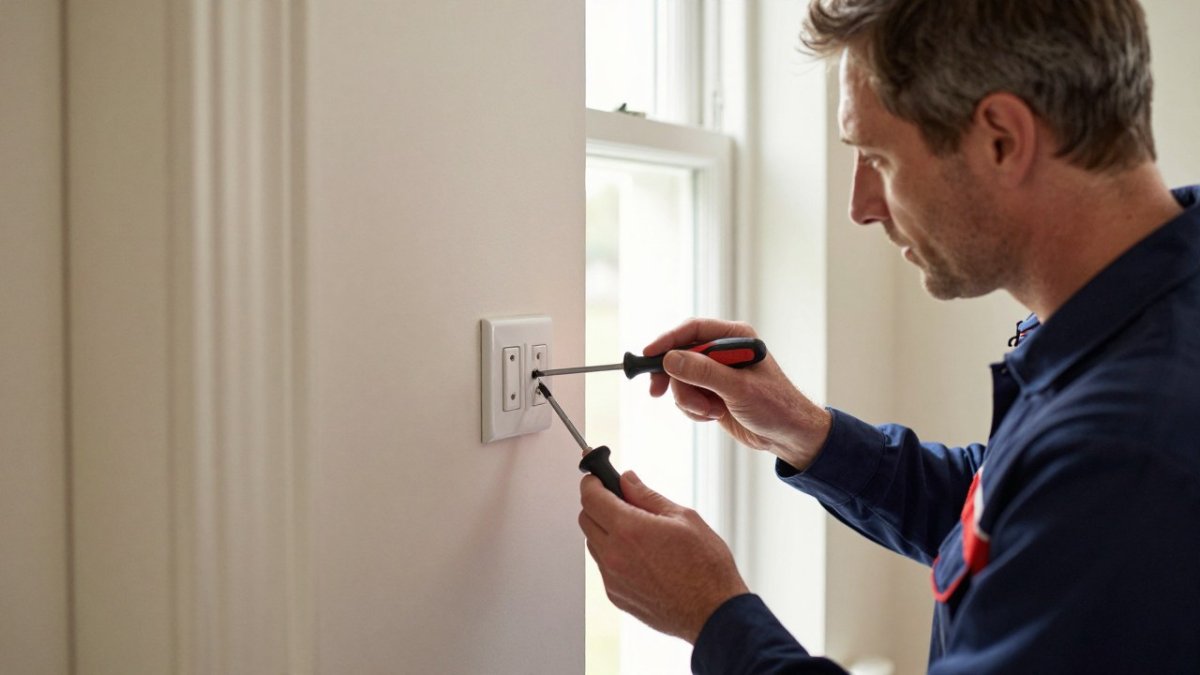
Some options can work without a neutral in principle:
- Low-power switches designed for two-wire installations
- Retrofit modules that draw power in other ways
- Smart bulbs used alongside a standard switch
An electrician can often add a neutral to the back box, but in older walls this may mean lifting boards or chasing cable. Get a quote before you assume it is simple.
Retrofit Smart Lighting Without Rewiring: Methods Compared
Here is how the main approaches compare for a building you want to upgrade without a full rewire:
| Method | Electrical Work | Best For | Main Drawback |
|---|---|---|---|
| Smart bulbs | None | Lamps and simple fittings | Wall switch must stay on |
| Two-wire smart switch | Minimal | Circuits with no neutral | Fewer features on some models |
| Smart switch with neutral added | Moderate | Full room control | Requires access to back boxes |
| Retrofit module | Low to moderate | Behind-switch control | Compatibility checks needed |
Pros of mixing methods:
- Lets you upgrade gradually
- Lowers the cost of the first phase
- Keeps the historic fabric largely intact
Cons of mixing methods:
- Different brands may not talk to each other
- More devices to manage
For many older properties, the best result comes from using smart bulbs in some rooms and smart switches where the wiring allows. To plan wiring that will still suit future lighting changes, see future proof smart home wiring.
Wireless Lighting Controls for Older Buildings and Your Next Step
Wireless controls can avoid new cable runs through fragile plaster and tight voids. The trade-off is that you are adding a radio network and, often, a cloud service to a building that previously worked on simple physical switches. Understanding how that network behaves when things go wrong is more important than comparing protocol names.
Local versus cloud control
- Local control: the hub or bridge talks directly to the devices on your own network. Scenes and schedules usually keep running if the internet drops, and your usage data stays in the building.
- Cloud control: commands travel through a manufacturer’s service. Setup is often simpler and remote access is easier, but automation may stop working during an internet outage and data leaves the building.
For a listed or heritage property, local control is often the better fit because it keeps everyday operation independent of an external service. It also means the lighting continues to behave predictably for occupants who are not comfortable with apps.
What happens during an outage
A common pattern is that the wall switch still operates the light even when the hub or internet is down, because the switch is wired into the circuit. App control, scenes and schedules may pause until the connection returns. Before buying, confirm with the manufacturer or installer that the physical switch remains functional offline, this is the single most important reliability question for an older building.
Privacy and security
Connected lighting can reveal occupancy patterns. Choose systems that let you keep control local where possible, use a strong and unique password on the hub, and keep device firmware updated. If the system supports it, separate the lighting network from the main home network. These steps are simple and reduce the risk of unauthorised access.
Physical controls and occupant handover
Automation should not make lighting harder to use. Keep at least one intuitive physical switch in each room, label any scene panels clearly, and leave written instructions for tenants, visitors or older occupants. A short handover session prevents the common problem where a resident cannot turn on a light because the app has changed or the phone is elsewhere.
Your next step
If you want a tailored plan for your building, AME Electrical can survey the wiring and advise on the right mix of methods. To discuss your project, UK government guidance on choosing a qualified electrician is a good place to check qualifications before you hire.
For current prices or a quote, visit the AME Electrical website and find out which smart lighting approach fits your property. You can also explore bespoke residential lighting design for a tailored plan.
Frequently Asked Questions
Can you install smart lighting in an old building?
In most older buildings, yes. Smart bulbs fit existing light fittings and need no wiring changes, while smart switches and retrofit modules can be fitted behind existing switches. The main limits are the condition of the wiring, whether a neutral wire is present at the switch position, and the fabric of listed or heritage properties, where planning or conservation consent may apply. A qualified electrician should inspect the circuits before any work begins, and pricing depends on the number of points, access and the control method chosen. For current prices or a quote, visit the AME Electrical website.
Do smart light switches need a neutral wire?
Many smart switches need a neutral wire to power their electronics, but not all do. Some models are designed to work without one by drawing a small trickle of current through the lamp, which can cause LED flicker or a bulb that glows faintly when switched off. Others use a retrofit module that sits behind the switch. Check the manufacturer’s wiring requirements against what is actually present at each switch position, and have an electrician confirm the wiring before fitting.
Can smart lighting be installed without rewiring?
Often it can. Smart bulbs require no rewiring at all, and wireless controls such as remote switches or battery-powered dimmers can be added without new cables. Smart switches and retrofit modules usually reuse existing cables, provided the switch position has a suitable neutral or the chosen product is compatible with the circuit. Where the wiring is damaged, overloaded or outdated, rewiring a section may still be the safer option, so an inspection is the first step.
Will smart lighting work with traditional or period light fittings?
It can, but compatibility depends on the fitting and the bulb. Standard bayonet and Edison screw bulbs in smart versions fit most traditional lamps and pendants, though dimmable smart bulbs may not suit every fitting. Period fittings with unusual shapes or limited heat dissipation can restrict bulb choice, and the wiring within the fitting should be checked. Test one fitting first before committing to a whole room, and consider how physical switches will still operate the lights.
