Last Updated: October 30, 2026
Quick Summary
Smart home systems are sets of connected devices and software that let you manage lighting, heating, security and access from one place. For UK homes, the strongest platforms combine Matter compatibility with reliable local operation, so core routines keep working when the internet drops. Choose by household need, and check your existing devices before committing.
- Matter support lets devices from different manufacturers work together without a separate bridge.
- Local-first platforms such as Home Assistant, Homey and Apple Home keep core automations running offline.
- List every device you own and its protocol before buying any hub.
- Add up hardware, installation, subscriptions and support to find the true cost.
- Confirm current pricing and UK availability directly with each provider before you buy.
Table of Contents
- How We Evaluated These Smart Home Systems Brands
- Quick Comparison of Leading Smart Home Ecosystems
- Best Smart Home Systems by Household Need
- Wired Smart Home Systems: When Cabling Makes Sense
- Checking Smart Home System Compatibility Before You Buy
- Total Cost of Ownership, Support and Long-Term Reliability
- Booking a Smart Home Consultation With AME Electrical
- Frequently Asked Questions
Smart home systems brands can make or break a renovation, and the choices you make now will shape how your home runs for years. Homeowners in Northern Ireland and across the UK often find that a platform chosen on looks alone clashes with the lighting, locks and heating they already own. This guide compares seven leading options so you can judge them on the criteria that matter in a UK home.
A smart home system is a set of connected devices, controllers and software that lets you manage lighting, heating, security and access from one place. The best systems do this reliably, integrate with other equipment and keep working when the internet drops.
How We Evaluated These Smart Home Systems Brands
We judged each platform on ecosystem compatibility, the range of devices it supports, how it is installed, ongoing support and the likely cost of running it. Privacy and local control also count, because cloud-dependent systems behave differently when connectivity fails.
Where a brand’s pricing or UK availability is unclear, check it directly with the provider. Prices and product ranges change quickly, so check current figures directly with each provider before you buy.
Quick Comparison of Leading Smart Home Ecosystems
Each platform suits a different kind of household, and the differences that matter most are compatibility, local control and how the system behaves when the internet drops. Use the table below as a starting point, then read the sections that match your situation.
| Platform | Type | Best For | Local control if the internet drops | Matter support | UK Pricing Verified |
|---|---|---|---|---|---|
| Google Home | Voice and app ecosystem | Households already using Google/Nest devices | Limited, most routines depend on the cloud | Yes, via Matter controllers and the Google Home app | Not verified |
| Amazon Alexa | Voice assistant ecosystem | Voice control and the broadest device support | Limited, cloud-first, with some local routines on newer Echo hubs | Yes, via Matter controllers and Echo hubs | Not verified |
| Apple Home | Platform for Apple users | Homes already on Apple devices | Strong, HomeKit Secure Video and many automations run on a local home hub | Yes, via HomePod and Apple TV home hubs | Not verified |
| Home Assistant | Open-source automation platform | Technically confident users who want local control | Strong, runs on local hardware and can operate offline | Yes, via the Matter integration | Not verified |
| Homey | Smart home hub platform | Mixed-brand homes wanting one app | Partial, many flows run locally on the hub | Yes, via the Homey Pro hub | Not verified |
| Savant | High-end controller system | Luxury residential projects | Strong, controller-based, designed for local operation | Supported on current controllers | Contact provider |
| Control4 | High-end controller system | Premium integrated installations | Strong, controller-based, designed for local operation | Supported on current controllers | Contact provider |
A platform is only as good as its compatibility with the devices you already own.
How to read the compatibility column
Matter is the cross-brand standard that lets devices from different manufacturers work together, and it is the single most useful thing to check before you commit. Readers wanting a practical route for pairing lighting with a wired system can follow our guide to integrating Philips Hue with KNX. A platform that supports Matter as a controller can usually bring in Matter-certified bulbs, plugs, sensors and locks from other brands without a separate bridge. That does not mean every feature travels, some advanced functions stay inside the manufacturer’s own app, so confirm the specific device and feature you need.
Protocols still matter underneath Matter. Zigbee and Z-Wave devices need a hub or bridge that speaks those protocols, Thread devices need a Thread border router (many newer hubs and speakers include one), and Wi-Fi devices connect directly but can crowd a home network. A mixed home often ends up with two or three of these running side by side, which is normal but worth planning for.
Before buying any hub, list every device you own and note whether it is Wi-Fi, Zigbee, Z-Wave, Thread or wired. That list tells you which hubs you actually need, and which platforms will leave devices stranded.
Where the ecosystems genuinely differ
The voice platforms (Google Home, Amazon Alexa, Apple Home) are strongest on convenience and weakest on deep local automation. Apple Home leans furthest towards local processing through its home hubs, which appeals to privacy-minded households. Home Assistant and Homey are the choice for mixed-brand homes that want one app and more local logic, at the cost of more setup time.
Matter standard overview
If you are unsure which platform fits your existing devices, speak to our team before any equipment is ordered.
Best Smart Home Systems by Household Need
Matching the system to the household matters more than picking a brand name. A young family wanting simple voice control has different needs from a luxury new build with cinema rooms and climate zones.
Voice-first households tend to suit Amazon Alexa or Google Home, given their wide voice assistant support. Apple Home is a strong fit if everyone already uses iPhones and iPads.
Technically confident owners who want full control may prefer Home Assistant, though it asks more of the person setting it up.
Luxury and bespoke projects often benefit from a professionally designed system.
Wired Smart Home Systems: When Cabling Makes Sense
Wireless devices are easy to add, but wired systems offer greater reliability for whole-home projects.
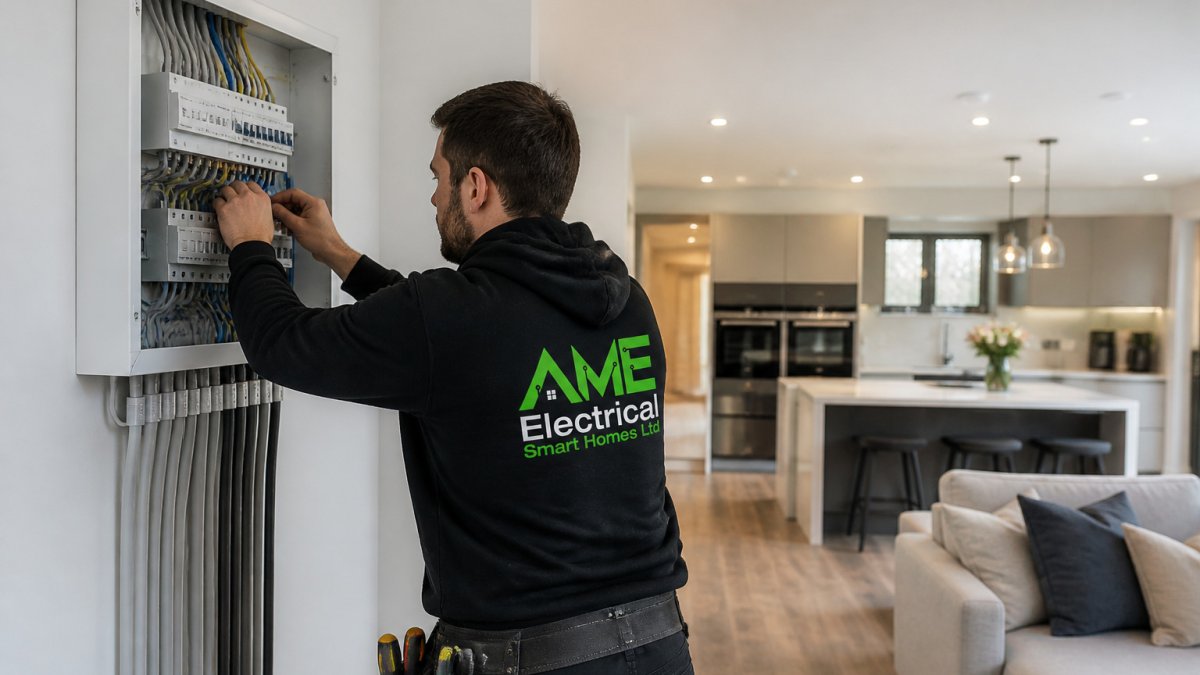
Wired systems make the most sense in new builds and major renovations, where walls are open and cabling can be routed cleanly. To see how KNX and DALI lighting work together in practice, read our guide to lighting control with both standards. Retrofitting an older property is possible, but it needs a survey first, because existing wiring may not suit the protocol. Our article explains whether legacy electrical systems can be upgraded to KNX and what to check first. The cost of running cables should be weighed against the reliability and long-term support a wired installation provides.
Checking Smart Home System Compatibility Before You Buy
Compatibility is where many projects go wrong. Before you commit to any brand, list every device you already own and every device you plan to add, then check each one against the platform’s supported list.
Ask three questions. Does the platform support the protocols your devices use? Will the devices work if the internet connection fails? Can you add a different brand later without replacing everything? Platforms that answer yes to all three give you more freedom over time.
Mixing brands is common. If you already have devices from other brands, speak to our team to confirm what can be integrated before any equipment is ordered.
Total Cost of Ownership, Support and Long-Term Reliability
The purchase price is only part of the picture. Running costs, subscription fees, replacement parts and the cost of professional support all add up over the life of a system, and the brands differ sharply in how they charge for each.
The cost lines to add up
A useful way to compare brands is to total five lines rather than one:
- Hardware and hubs, the devices themselves, plus any hub, bridge or controller the platform requires. Some ecosystems need a hub for local automation; others do not.
- Installation, DIY platforms cost nothing to install but take time; controller-based systems are installed by an integrator, so labour is a real line item.
- Subscriptions, cloud recording, professional monitoring and advanced automation features are often sold monthly. Check whether the feature you want sits behind a subscription.
- Consumables and replacement, batteries in sensors, locks and remotes, plus bulbs and devices that fail or fall out of support.
- Support and maintenance, what happens after handover, how faults are handled, and whether updates are included.
Subscription pricing changes. Always confirm the current monthly or annual charge, and what happens to your devices if you cancel, directly with the provider before you buy.
Subscriptions and monitoring
Ask whether monitoring is included, what the contract length is, and what happens if the provider changes or withdraws its service. A system that depends on a cloud service you cannot replace can become expensive e-waste if that service ends.
Lock-in and future-proofing
This is where total cost of ownership and long-term reliability meet. A platform that supports Matter and open protocols gives you more freedom to switch brands later without replacing everything. For more on future-proofing a smart home, see our practical guidance on longevity. A closed platform may be cheaper up front but cost more when you want to change. Before you commit, ask three questions: can I reuse my devices on another platform, can I export my automations, and will the manufacturer keep supporting this hardware for the life of the installation?
Reliability and offline operation
Reliability is not just about faults, it is about what keeps working when the internet, power or a cloud service fails. Local-first systems (Home Assistant, Homey, Apple Home with a home hub, and controller-based systems) tend to keep core automations running offline. Cloud-first systems may lose voice control and remote access until the connection returns. For a household that relies on the system for heating, lighting or access, that difference is part of the real cost.
Getting a written quote
Because pricing depends on quantity, dates and delivery, we recommend requesting a written quote from AME Electrical rather than relying on general estimates. Our UK-wide guide to smart home integration providers compares what to look for in an integrator.
Booking a Smart Home Consultation With AME Electrical
AME Electrical designs and installs integrated smart home systems for residential, commercial and luxury projects, with certified KNX and Nice installers on the team.
If you are weighing up brands for a renovation or new build, a consultation is the quickest way to get a clear answer. Visit our website to request a quote and talk through your requirements with our team.
Frequently Asked Questions
What are the best smart home systems brands?
The most widely used smart home platforms in the UK are Google Home, Amazon Alexa and Apple Home, which are compared on compatibility and features in recent guides. Home Assistant is frequently rated highly overall for people willing to manage installation themselves, while Savant and Control4 are established controller brands aimed at high-end projects. The right choice depends on which devices you already own, how much you want to customise and whether you need professional installation and ongoing support.
Which smart home system works best for a whole house?
For a whole-house installation, a wired or hybrid system designed by a professional usually gives the most reliable results, because lighting, climate, security and access control can be integrated under one controller. Platform ecosystems such as Google Home or Apple Home work well for smaller setups with compatible devices. Larger properties benefit from a planned design that confirms how each device will communicate before equipment is purchased.
What is the difference between a smart home system and a smart home ecosystem?
A smart home system is the complete set of hardware, wiring and controls installed in a property, including lighting, heating, security and access. A smart home ecosystem is the platform and brand family that connects compatible devices, usually through a central app and voice assistant. Choosing an ecosystem affects which devices you can add later, so it is worth considering before buying individual products.
Are wired smart home systems better than wireless systems?
Wired systems generally offer more consistent performance and are less dependent on Wi-Fi signal strength, which matters in larger or older buildings. Wireless devices are quicker and less disruptive to install and suit renovations of limited scope. Many properties use a combination, with core lighting and control wired and additional sensors or plugs added wirelessly.
